

Recommended Discounts
_37751.webp)
Honor of Kings Global
Official Automatic Top-up!! And get extra 100% tokens bonus on first top-up!
44.35% OFF
Related articles


HoK Brave Points Guide: Escape Ranked ELO Hell Fast
Honor of Kings Brave Points are the visible ranking currency moving you through seven tiers — Bronze to Grandmaster and beyond. Grandmaster spans 0–24 stars, Epic unlocks at 25, Legend at 100+. ELO hell here is real but escapable: understand how hidden MMR interacts with performance grades, maintain 55–60% win rate, and hit SSS-tier metrics to gain bonus stars even on losses.
Buffget
What Are Brave Points and How Do They Define Your Rank?
HoK ranked runs on a dual-layer system. The visible layer is Brave Points — star-based progression across seven tiers: Bronze, Silver, Gold, Platinum, Diamond, Master, Grandmaster.
Sub-tier breakdown:
- Bronze/Silver: 3 sub-tiers each
- Gold/Platinum: 4 sub-tiers each
- Diamond/Master: 5 sub-tiers each (longest individual climbs)
Ranked unlocks at account level 6 with 5+ heroes owned — a low barrier that creates wide skill variance in Grandmaster lobbies.
To access ranked and unlock premium heroes for Pick/Ban, many players use safe Honor of Kings global recharge through buffget for competitive pricing and instant HOK Token delivery.
How Stars Are Awarded and Deducted
Base mechanic: win = +1 star, loss = −1 star. Max stars triggers a tier advancement match; zero stars triggers relegation.
Bravery Points (protection currency, distinct from stars) earn at 3–5 base per match when no AFK is detected. These activate Star Protection, blocking star loss on defeat.
Performance Bonuses Most Players Ignore
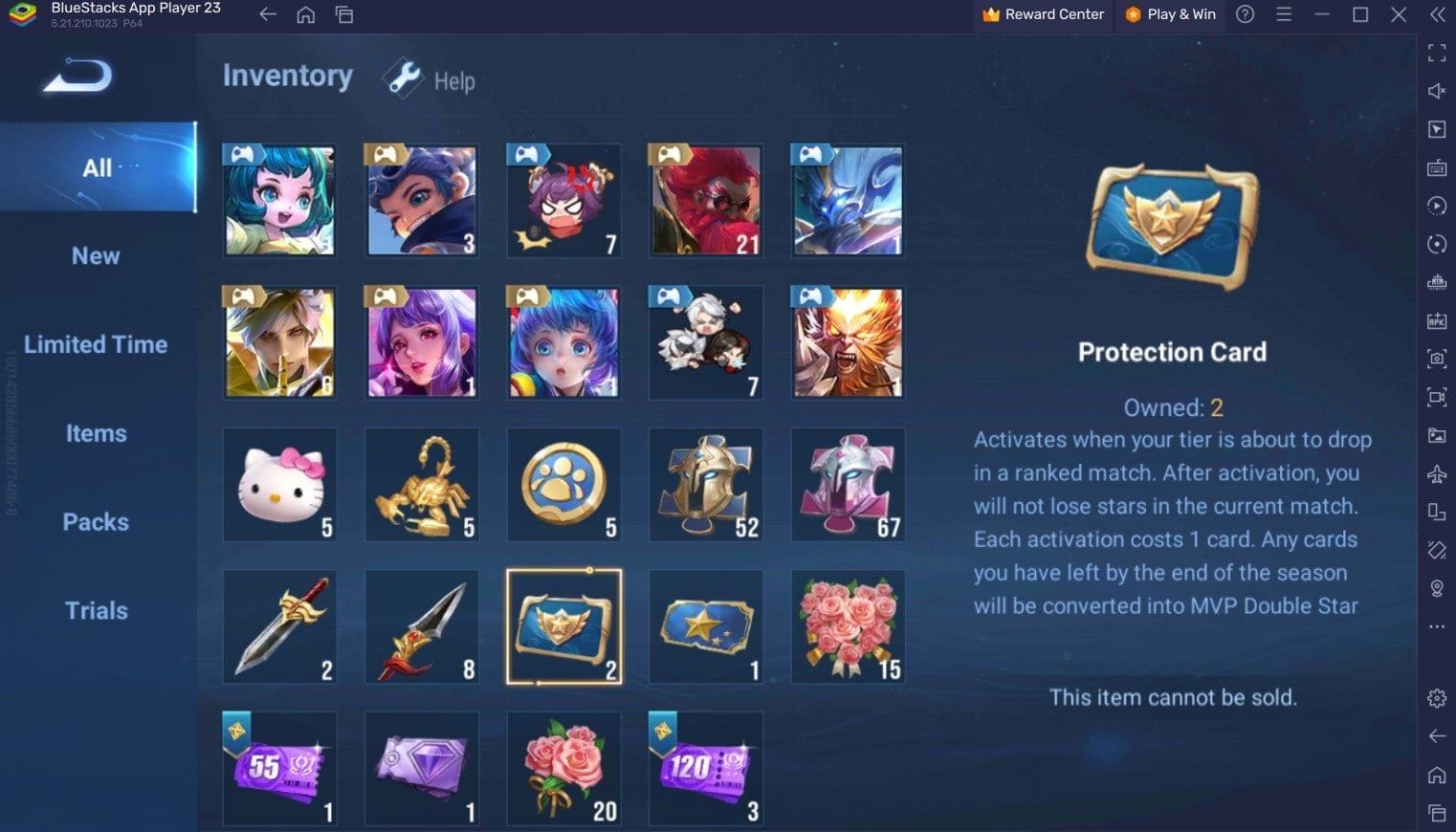
Victory streaks generate escalating Bravery Point bonuses:
- 2 consecutive wins: +6 Bravery Points
- 3 consecutive wins: +10 Bravery Points
- 4+ consecutive wins: +16 Bravery Points
Gold Medal performance adds further: 30 Bravery Points in Platinum and below, 50 in Diamond and above — enough buffer to absorb multiple losses without star damage.
Hidden MMR: The Invisible System Behind HoK Matchmaking
What Hidden MMR Is and Why It Exists
Hidden MMR is the internal matchmaking rating estimating your true skill level, independent of your star count. Brave Points can be inflated by lucky teammates or deflated by a bad week. MMR provides a stable signal underneath.
The algorithm analyzes your most recent 20 games on a rolling window. One great session won't permanently fix poor MMR — but a focused 20-game improvement block meaningfully shifts your match quality.
How MMR Determines Your Lobbies
Your hidden MMR sets the skill bracket of opponents and teammates — not your star count. A high-star, low-MMR player faces opponents matched to their MMR. This is the mechanical root of ELO hell: visible rank and actual matchmaking bracket diverge.
The system targets 50% win rate as equilibrium. Climbing requires pushing to 55–60% consistently, forcing MMR recalibration upward.
Why Rank and MMR Feel Out of Sync
When your hidden score rises faster than your stars, you'll face tougher lobbies before your rank catches up. This isn't the system breaking — it's calibration in action. Don't interpret harder matches as evidence of broken matchmaking.
What Is Grandmaster ELO Hell? (And Is It Real?)
Yes, it's real — and structural.
Grandmaster is the first tier without fixed sub-rank divisions. Its 0–24 star band concentrates a massive, diverse player pool into one queue. A 3-star Grandmaster and a 24-star Grandmaster share the same lobby despite substantial skill gaps.
Grandmaster also functions as a bottleneck: Epic-caliber players are temporarily stuck here during calibration, while Master-peaked players fight to stay. Lobby skill distribution becomes genuinely unpredictable.
But ELO hell isn't a conspiracy. It's a statistical phenomenon where MMR is correctly placed but win rate hovers near 50%, creating the sensation of going nowhere. The system works as intended — your performance metrics need adjustment, not the algorithm.
Why MMR Exploits Don't Work in HoK
Common attempts — intentional loss streaks to reset MMR, match dodging, stat-padding in low-priority games — don't produce results. The system evaluates performance across 20 recent games with full context. Artificial patterns get smoothed out by the rolling average.
The performance grading system (scaled 0.0–16.0, grades C through SSS) evaluates contribution holistically. SSS requires:
- 70–80% kill participation
- KDA of 6.0 or higher
- 3+ objective contributions
You can't inflate grade by farming kills while ignoring objectives. Multi-factor evaluation makes stat-padding ineffective.
What Legitimate Star Gains Actually Look Like
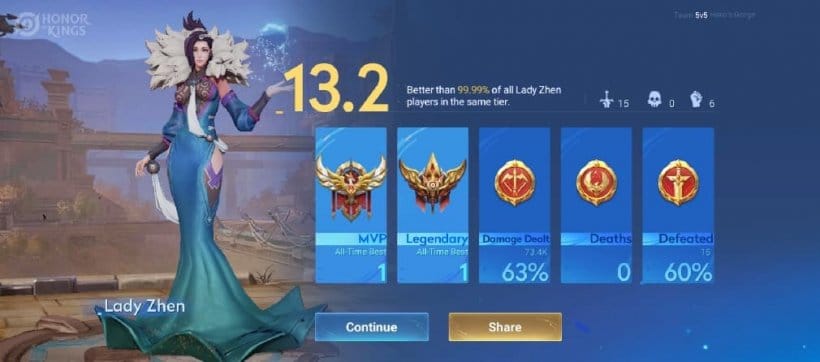
- Win + SSS rating: +2 to +3 stars
- Win + A/S rating: +1 to +2 stars
- Loss + SSS rating: +1 star (elite performance advances rank even in defeat)
- Loss + B/C grade: −1 star, no protection benefit
Legitimate Strategies to Improve MMR and Brave Points Gains
Consistency Beats Streaks
A 55–60% win rate over 20+ games outperforms a 10-game win streak followed by a losing spiral. The rolling 20-game window means volatility hurts you even when your peak is high.
For hero pool flexibility in Pick/Ban — which unlocks at Diamond and requires Senior proficiency with any selected hero — the HOK Tokens instant delivery center at buffget provides fast, secure recharging without delays.
KDA, Objective Participation, and Vision Score Benchmarks
Hit these per match to consistently reach A-grade and above:
- Kill participation: 70%+ for SSS consideration
- KDA: 6.0 or higher
- Objective contributions: 3+ (Dragon, Baron, towers)
- CS discipline: Last-hitting grants 50% bonus gold — consistent farming separates Diamond from Grandmaster players
Key spawn timers to build your game sense around:
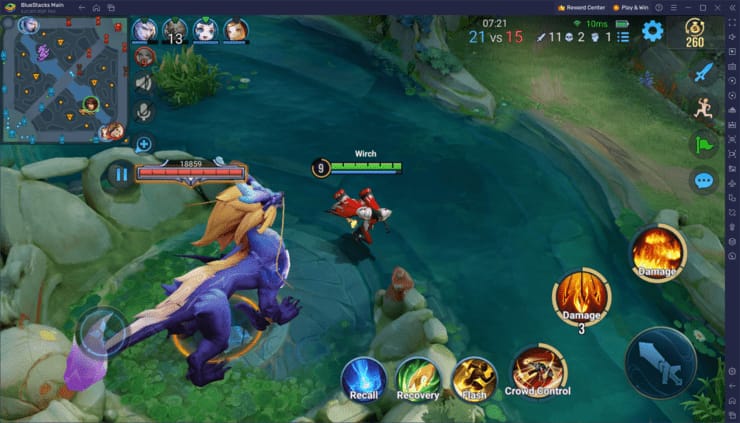
- Dragon: 3:30 (major contests at 7:30 and 11:30)
- Baron: 15:00 and 20:00
Orienting your decisions around these timers is the single highest-leverage habit change available at Grandmaster.
Cut High-Variance Plays
Solo dives, 1v3 engagements, unconventional builds occasionally produce highlights but consistently damage your performance grade when they fail. The cost isn't just the death — it's the objective your team loses while you're respawning.
Hero Selection and Role Strategy
Which Roles Carry Hardest in Grandmaster
Support and Assassin offer the highest individual carry potential. Support controls vision, peel, and engage timing — all undervalued at this tier. Assassins create pick opportunities that directly translate into objective control.
Current S-Tier Heroes for Ranked Climbing

- Lam (Assassin): High burst, strong pick potential, punishes overextension
- Loong (Marksman): Consistent damage, scales well into late-game objective fights
- Yaria (Support): Exceptional peel and engage, elevates team fight coordination
- Da Qiao (Support): Displacement utility that disrupts Grandmaster's chaotic team fights
Counter-Picking in the Draft Phase
Prioritize banning heroes that counter your intended pick — not blindly banning the highest-tier hero. Senior proficiency is required to select a hero in draft. Practice your core pool in normal games before ranked sessions.
Objective Control: Converting Leads Into Brave Points
Why Objectives Win Games, Not Kills
Dragon at 7:30 grants a stat advantage compounding through mid-game. Baron at 15:00 provides a push window that ends games before the enemy stabilizes. Individual kills generate pressure; objectives generate wins.
Vision as a High-Return, Low-Skill Investment
Warding Dragon and Baron approach paths before spawn timers gives your team information that directly translates into objective control. Most Grandmaster players under-invest in vision — this is an exploitable gap that requires zero mechanical improvement to act on.
Executing Your Win Condition
Every composition has one. Identify yours in draft: poke comp (wins at range), dive comp (wins in close-range chaos), or pick comp (wins through isolation). Executing your win condition consistently — rather than reacting to the enemy's — is what separates players who escape Grandmaster from those who stagnate.
Mental Game: How Tilt Destroys Brave Points Progress
Recognize Tilt Before It Costs MMR
Tilt manifests as impulsive engagements, ignoring pings, abandoning role responsibilities. These directly damage your performance grade — and star gains — even in wins. After two consecutive losses, the third game carries high tilt risk. Recognize the pattern before queuing.
Session Limits and Decision Fatigue
Hard limit: 3–4 ranked matches per session. Performance grades measurably decline in later matches of extended sessions. Four focused matches daily outperforms ten matches played through fatigue.
Pre-Match Routine
Before each session, review your previous match's performance grade. Set one concrete improvement intention — not play better, but contest Dragon at 7:30 or ward Baron approach at 14:00. Specific single-focus goals outperform vague ones every time.
Your 7-Day Plan to Escape Grandmaster ELO Hell
Days 1–2: Audit Your Playstyle Review your last 20 games. Calculate your average kill participation, KDA, and objective contribution count. Compare against SSS benchmarks (70%+ participation, 6.0 KDA, 3+ objectives). This reveals your specific gap.
Days 3–5: Role Lock and Objective Focus Lock into one role, maximum two heroes. Build your game plan around Dragon and Baron timers. Track whether you're present for every objective contest. Eliminate high-variance solo plays entirely for this block.
Days 6–7: Track Trends and Adjust After 5 days of disciplined play, review your Brave Points trend. Sustained 55%+ win rate means MMR is recalibrating upward. If not, revisit your hero pool — the issue is likely a mismatch between your role and the current meta.
Rank Decay, Season Resets, and Protecting Progress
How Decay Works at Grandmaster
Grandmaster-specific decay: 7 consecutive inactive days = −1 star. Lower tiers are unaffected. A two-week break costs 2 stars minimum.
Pro tip: Play at least one ranked match every 6 days to reset the inactivity timer. Before any planned break, build a 50+ Bravery Point buffer for Star Protection — A-grade performance on a protected loss consumes approximately 10–15 Bravery Points.
Using Season Resets as a Recalibration Opportunity
Ranked seasons last 3 months. At season end: Grandmaster players with 0–9 stars reset to Diamond II; Master players reset to Diamond. Season 7 launched September 25, 2025, establishing the current competitive cycle.
Resets aren't punishments. Players whose MMR exceeds their star count climb faster in the new season than they did at the end of the previous one. Use the reset window aggressively.
FAQ
Q: What are Brave Points in Honor of Kings and how do you earn them? Brave Points are the protection currency earned at 3–5 base per match (no AFK). They activate Star Protection to prevent star loss on defeat. Streak bonuses and Gold Medal performance significantly accelerate gains.
Q: Does HoK have a hidden MMR separate from Brave Points? Yes. Hidden MMR is an internal skill estimate determining your matchmaking bracket, independent of star count. It recalibrates based on your most recent 20 games.
Q: Why do I lose Brave Points faster than I gain them? Most likely your win rate is at or below 50% — the system's equilibrium point. You need a sustained 55–60% win rate for net positive star gains. Performance grades below A on losses also eliminate any protection benefit.
Q: Is Grandmaster ELO hell real in HoK? Structurally, yes. Grandmaster concentrates a wide skill range into a single 0–24 star band, creating high lobby variance. It's escapable through consistent 55%+ win rates and SSS-grade performance — not luck or exploitation.
Q: What heroes are best for climbing out of Grandmaster? Current S-tier: Lam (Assassin), Loong (Marksman), Yaria (Support), Da Qiao (Support). Support and Assassin roles offer the highest individual carry potential in Grandmaster's environment.
Q: How does rank decay work and does it affect Brave Points? Grandmaster decay deducts 1 star after 7 consecutive inactive days. It doesn't directly affect Bravery Points but reduces your star count, potentially triggering relegation matches near 0 stars. Play at least one ranked match every 6 days to prevent it.