

Recommended Discounts
_37751.webp)
Honor of Kings Global
Official Automatic Top-up!! And get extra 100% tokens bonus on first top-up!
44.35% OFF
Related articles


HoK Global Gacha Pity Guide: Exact Token Costs March 2026
March 2026 Honor of Kings collaboration events demand precise token budgeting for Legend skins. Hard pity guarantees an Honor Crystal at 20,000 tokens, but average acquisition costs 11,000-13,000 tokens with base drop rates of 0.5-2%. This guide covers exact pity math, token timelines, and optimization for F2P and paying players targeting Lady Sun Doomsday Mecha Legend and Nuwa Rare Legend skins (January 16-April 9, 2026).
Buffget

Understanding HoK Global Limited Gacha System
The gacha pity system uses cumulative probability—each unsuccessful pull incrementally increases your chances. Unlike standard draws, limited gacha maintains persistent pity counters (X/200 pulls), ensuring guaranteed rewards.
March 2026 features two major collabs running consecutively. Ultraman spans January 16-April 9, 2026, divided into three phases:
- Phase 1 (Jan 16-22): Legend skins at promotional rates
- Phase 2 (Jan 23-Mar 31): Standard pricing
- Phase 3 (Apr 1-9): Final window before Season 4 tokens expire April 9
For efficient token acquisition, HoK tokens top up through buffget offers competitive pricing and fast delivery with secure transactions.
What Makes Limited Gacha Different
Limited gacha introduces exclusive skins unavailable through regular shops. Lady Sun Doomsday Mecha Legend and Nuwa Rare Legend exist only within designated event windows. These events use separate token currencies that don't carry over to standard pools.
Pity mechanics differ from probability-independent draws. Each pull without Legend-tier reward increases subsequent success rates through soft pity (activates 10-20 pulls before hard pity). Your 180th pull has significantly higher odds than your 50th, though both contribute equally toward 200-pull hard pity.
Token acquisition splits between:
- Free: daily missions, events, Honor Pass progression
- Paid: token packs with first-purchase bonuses (800-token pack yields 960 tokens for $9.99 = 20% bonus)
March 2026 Collab Structure
Ultraman implements three-phase pricing rewarding early participation:
- Lady Sun Doomsday Mecha Legend: 990 tokens Week 1 (Jan 16-22) → 2,288 tokens standard
- Nuwa Rare Legend: identical pricing
- Week 1 complete collection: 7,040 tokens vs 11,940 tokens standard (70% increase)
Jujutsu Kaisen collab introduces 3-5 exclusive skins (1,688-2,888 tokens each), overlapping Ultraman's final phase.
Token costs by tier:
- Epic: 888-1,388 tokens
- Legendary: 1,688-2,888 tokens (Phase 2)
Token Types and Acquisition
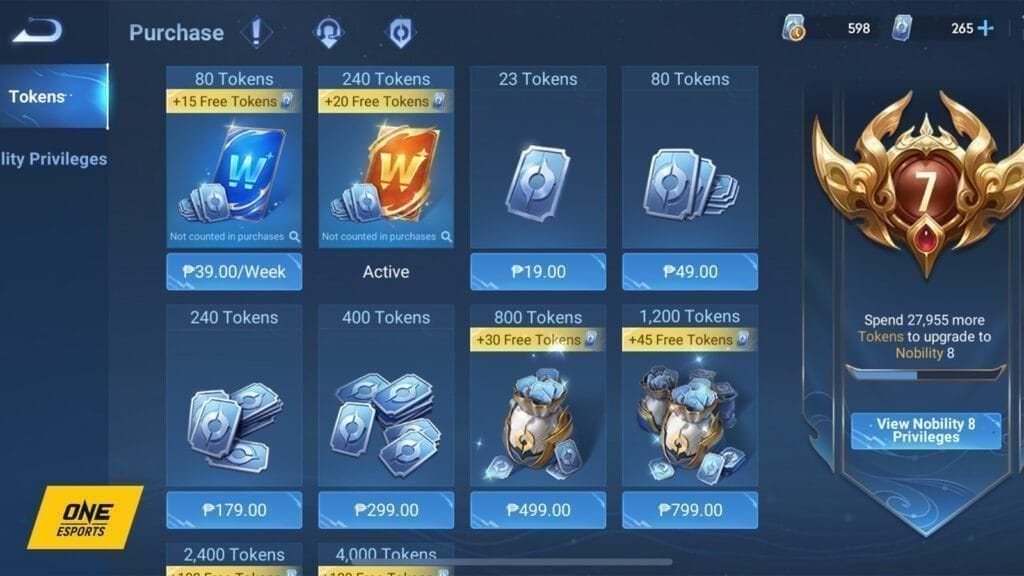
Event-specific tokens are primary currency. Single pulls cost 300 tokens, ten-pulls 2,700-2,850 tokens. Ten-pull provides marginal savings (time efficiency, not probability improvement).
Promotional events boost base drop rates 25-50%, temporarily improving odds before pity. Base 0.5-2% rate rarely exceeds 3% even boosted—pity remains most reliable path.
Honor Pass system:
- Level 50: Epic skin
- Level 100: Legendary skin (valued 2,288 tokens)
- Effectively reduces out-of-pocket requirement by 2,288 tokens
Complete Pity System Mathematics
200-pull hard pity requires 20,000 tokens at standard pricing (300 tokens × 200 pulls). This is absolute maximum for Honor Crystal guarantee containing Legend skins.
Soft pity activates pulls 180-190, creating probability gradient. Community data suggests 15-25% cumulative probability increase across soft pity window. 60-70% of players obtain Legend skin between pulls 150-200.
Hard Pity Threshold
Guaranteed legend skin: 20,000 tokens standard pricing. Promotional discounts reduce this:
- 25% discount: 15,000 tokens (225 per pull)
- 50% discount: 10,000 tokens (rare, anniversary events only)
Pity counter displays X/200, persisting across event phases within same collab. 150 pulls in Ultraman Phase 1 maintains progress into Phase 2. However, pity resets completely between different collabs—Ultraman pity won't carry to Jujutsu Kaisen.
Critical deadline: April 1, 2026 token recharge deadline. Purchases must occur before this date, though event runs until April 9 (7-day processing gap).
Soft Pity Mechanics
Soft pity functions as probability safety net activating before hard pity. Increased drop rates begin around pull 180, each subsequent pull adding cumulative weight.
Global server maintains transparent probability disclosures, publishing base rates and pity thresholds in-game. Real-world data shows average cost 11,000-13,000 tokens (approximately 110 pulls), suggesting soft pity effects begin well before 180-pull threshold.
Cumulative Probability Curve
Gacha follows modified geometric distribution with increasing success probability:
- Pull 50: ~25% cumulative success
- Pull 100: ~50%
- Pull 150: ~75%
- Pull 180: >85%
Each pull maintains individual probability regardless of previous results—game doesn't remember bad luck. Pity system provides only true probability increase.
Historical Drop Rate Data
Lady Sun pick rate: 12-15%, Nuwa: 18-22% (player preferences, not drop rate differences). All Legend-tier skins within same event share identical base probabilities.
Token pity counter mechanics refined late 2025, introducing persistent counter display across event phases. Current system's transparency significantly improves budget planning.
Promotional boosts (25-50%) during launches and weekends provide marginal improvements. 50% boost on 1% base = 1.5% per-pull odds, still requiring ~67 pulls for 50% cumulative probability.
Exact Token Cost Calculation March 2026
Calculation depends on: target skin pricing tier, current pity progress, available discounts.
Week 1 direct purchase (Jan 16-22):
- Lady Sun: 990 tokens
- Post-Jan 22: 2,288 tokens standard
Gacha scenarios:
- Worst-case: 20,000 tokens (hard pity)
- Average-case: 11,000-13,000 tokens
- Best-case: <15,000 tokens (first 50 pulls)
For reliable top-ups meeting event deadlines, buy Honor of Kings tokens online through buffget ensures secure transactions and fast delivery.
Worst-Case: Full Pity
Absolute maximum: 20,000 tokens (standard pricing, zero lucky drops, no discounts). Only 15-20% of players reach full hard pity.
25% discount reduces worst-case to 15,000 tokens (5,000-token savings = ~17 days F2P farming). First 4,000-token pack yields 4,800 tokens for $48.99, meaning worst-case requires 3-4 maximum-tier purchases.
Complete collection (both Legend skins + Epics): 11,940 tokens standard pricing via direct purchase. Week 1 window: 7,040 tokens (70% increase if missed).
Average Case: Expected Expenditure
Statistically expected: 11,000-13,000 tokens (median across thousands of pulls). Accounts for soft pity activation pulls 150-180 (75-85% cumulative probability).
Budget 12,000 tokens (midpoint) for reasonable safety margin. At 300 tokens per pull = 40 pulls. Ten-pull options (2,700-2,850 tokens) = 4-5 sessions.
25% discount on 12,000-token average = 9,000 tokens (3,000-token savings = $30-40 value).
Best-Case Scenarios
Lucky players obtain Legend within first 50 pulls: 15,000 tokens (11,250 with 25% discount). Probability 25-40% depending on rate boosts—reasonably common but unreliable for planning.
Week 1 direct purchase = true best-case: 990 tokens Lady Sun during Jan 16-22. Both Legend skins Week 1: 1,980 tokens vs 24,000-26,000 worst-case gacha for both.
Honor Pass Level 100 grants Legendary skin (2,288 token value), effectively one free Legend for consistent daily play. Combined with Week 1 pricing, F2P can secure two Legends for <1,000 tokens + time investment.
Calculation Examples
Example 1: Conservative Player, One Legend
- Starting pity: 0/200
- Target: Lady Sun Doomsday Mecha
- Strategy: 25% discount, budget average case
- Calculation: 12,000 × 0.75 = 9,000 tokens
- Real money: Two 4,000-token packs (9,600 tokens) = $97.98
Example 2: Aggressive Player, Complete Collection
- Starting pity: 0/200
- Target: Both Legends + Epics
- Strategy: Week 1 direct purchase
- Calculation: 7,040 tokens complete Week 1
- Real money: One 4,000-pack + one 800-pack + 2,240 free = $58.98 + farming
Example 3: F2P with Partial Pity
- Starting pity: 80/200
- Target: One Legend via gacha
- Available: 3,600 tokens (farming + Honor Pass)
- Calculation: 120 pulls remaining × 300 = 36,000 needed - 3,600 = 32,400 deficit
- Conclusion: Requires purchase or lower to Epic-tier
Token Acquisition Timeline and Farming
F2P accumulates 150-200 tokens daily (missions, events, login rewards). Monthly: 4,500-6,000 tokens—insufficient for guaranteed pity but adequate for 50-pull attempts or Epic acquisitions.
Event duration Jan 16-Apr 9 = 84 days. Maximum F2P accumulation: 12,600-16,800 tokens (perfect daily completion). Places average-case Legend acquisition within reach but requires zero spending on other content.
Daily Token Income
Daily missions: 50-80 tokens/day depending on completion rate.
- Match participation: 5 tokens/match (25 token cap)
- First win bonus: 15 tokens
- Social tasks: 10 tokens team play
- Time required: 60-90 minutes focused gameplay
Event-specific dailies boost income 30-50%. Ultraman Phase 1: 100-150 tokens daily, tapering to 50-75 later phases.
Redemption codes:
- Access: Diamond menu > Community > Gift Code > enter UID + code > Exchange
- FLOWBORN: 60 Honor Points + 500 Dragon Crystals (~150 tokens)
- HONORGIFT: 13,888 Starstones (~400 tokens)
- Codes expire unpredictably—monitor community actively
Weekly and Monthly Events
Weekly missions (reset Mondays): 300-500 tokens for cumulative goals (20 ranked matches, 50 total matches, hero quotas). Favor intensive weekend sessions vs daily grinding.
Monthly milestones (1k, 2.5k, 5k, 10k cumulative tokens):
- 5,000 tokens: Epic skin
- 10,000 tokens: bonus pulls
- Reaching 10k effectively reduces pity requirement by 33 pulls
Skin voting (Mar 1-31): 50-100 tokens per vote, bonus for detailed feedback. Accumulates 500-1,000 tokens across voting period.
Battle Pass Contributions
Honor Pass highest-value token source:
- Free track: ~2,000 tokens across 100 levels
- Premium track ($9.99): 5,000-6,000 tokens + Level 100 Legendary (2,288 value)
- Premium total value: 7,288-8,288 tokens for $9.99 (73-83% discount vs direct purchase)
Level 100 requires ~50,000 XP:
- Daily missions: 500 XP
- Match participation: 100 XP/match
- Weekly challenges: 2,000 XP
- Target: 595 XP daily average = 1-2 hours daily play
Level 50 Epic skin (888-1,388 value) + 2,000 free tokens = 2,888-3,388 value without premium purchase. Minimum target for budget players.
Time to Reach Pity F2P
20,000 tokens hard pity requires 100-133 days at 150-200 daily income. 84-day event duration falls short—hard pity mathematically impossible for pure F2P starting from zero.
Average-case 12,000 tokens achievable with perfect completion + Honor Pass Level 100.
Realistic projections (80% completion = 120-160 tokens daily):
- 84 days yields: 10,080-13,440 tokens
- Sufficient for average-case with minimal luck or one guaranteed Epic + multiple pulls toward Legend
Pity resets between collabs. Players who built pity in 2025 lost progress entering 2026, making early-year events challenging for F2P.
F2P vs Paid Path Comparison
F2P requires 84 days perfect completion for average-case pity. Paying players secure guaranteed acquisition within minutes.
Minimum spend for guaranteed Legend (zero tokens starting):
- Standard pricing: $100-120 (hard pity)
- 25% discount: $75-90
- Strategic spending + farming: $40-60 (average-case)
F2P Realistic Projections
80% daily completion across 84 days: 10,080-13,440 tokens from missions. Add Honor Pass free track (2,000) + redemption codes (500-1,000) = 12,580-16,440 total.
Covers average-case single Legend but falls short of complete collection or worst-case pity.
F2P must prioritize single-target. Both Lady Sun + Nuwa requires 22,000-26,000 tokens average-case dual acquisition—impossible without purchases.
Token banking from late 2025 events provides 5,000-10,000 reserves, dramatically improving odds. However, requires forgoing 2025 limited content.
Minimum Spend for Guaranteed Legend
Token bundle efficiency ranking:
Tier 1 (Highest Value): First-Purchase Bonus
- 4,000-pack: $48.99 for 4,800 tokens = $10.20 per 1,000
- 800-pack: $9.99 for 960 tokens = $10.40 per 1,000
Tier 2 (Standard): Regular Packs
- 4,000-pack: $48.99 for 4,000 = $12.25 per 1,000
- 2,000-pack: $24.99 for 2,000 = $12.50 per 1,000
Tier 3 (Poor): Small Packs
- 800-pack: $9.99 for 800 = $12.49 per 1,000
- 400-pack: $4.99 for 400 = $12.48 per 1,000
Tier 4 (Worst): Micro
- 100-pack: $1.99 for 100 = $19.90 per 1,000
Hard pity from zero: 20,000 tokens = $204-245 standard. With first-purchase bonuses: $180-200. 25% discount: 15,000 tokens = $153-180 ($50+ savings).
Optimal purchase strategy (15,000 tokens needed): First 4,000-pack (4,800) + first 800-pack (960) + standard 4,000-pack (4,000) + standard 4,000-pack (4,000) + standard 2,000-pack (2,000) = 15,760 tokens for $137.95
Hybrid Strategies
$50 budget: One first-purchase 4,000-pack (4,800) + farming (12,000-16,000) = 16,800-20,800 total. Covers average to worst-case. $50 functions as insurance vs bad luck.
$100 budget: Both first-purchase packs + one standard 4,000-pack = 9,760 purchased. Combined with farming (12,000-16,000) = 21,760-25,760 total. Eliminates all probability risk.
$150+ whale: Direct purchase sufficient for 11,940-token standard collection + safety margin. Prioritizes time efficiency and completeness over cost optimization.
Common Gacha Math Misconceptions
Pity operates on cumulative probability, not due for win logic. Each pull maintains independent probability—199th pull doesn't have 99.5% success simply because you failed 198 times. Only soft pity provides true probability increase at specific thresholds (180-190 pulls).
Independent vs cumulative probability:
- Independent: each pull has identical base odds regardless of history
- Cumulative: likelihood you've succeeded at least once across multiple pulls
- 1% per-pull = 63% cumulative across 100 pulls, but pull 101 still has only 1% independent probability
Why 'Due for Win' is Wrong
Gambler's fallacy assumes past failures increase future success in independent events. Game's RNG treats each pull identically—doesn't track bad luck or compensate.
Players misinterpret cumulative probability as due wins. 100 pulls with 63% cumulative doesn't mean pull 101 has 63% chance—means 63% likelihood you'd have succeeded somewhere within pulls 1-100. Pull 101 maintains base 1% unless soft pity activated.
Pity Counter Reset Myths
Pity persists across phases within same collab (Ultraman Phase 1→2), but resets between different collabs (Ultraman→Jujutsu Kaisen).
150 pulls during Ultraman Phase 1 (Jan 16-22) maintains 150/200 into Phase 2 (Jan 23-Mar 31). Doesn't carry to separate Jujutsu Kaisen collab.
Token expiration creates pseudo-reset. Season 4 tokens expire Apr 9, forcing conversion or loss. However, affects currency not pity counter—pull count remains intact even if tokens expire.
Post-event token conversion: unused tokens convert to generic currency at 50-70% value loss. Makes pre-event budget planning critical.
Does Spending Increase Drop Rates?
No. Game maintains identical probability for all players regardless of spending history. Whale's first pull = F2P's first pull = 1% odds. Spending advantage is reaching pity faster through token volume, not improved per-pull odds.
Ten-pulls don't have better odds than singles—mathematics identical. Ten-pull performs ten independent checks at same base rate. Only difference: time efficiency and slight per-token discount (2,700-2,850 for ten vs 3,000 for ten singles).
Promotional rate boosts (25-50%) apply universally during active periods, not selectively to spenders. 50% boost on 1% base = 1.5% for everyone. Spender's advantage: performing 100 pulls vs F2P's 20 pulls during boost window.
Independent Probability Events
Each gacha pull = independent Bernoulli trial with fixed success probability. Outcome of pull N has zero influence on pull N+1 (excluding pity effects). Hot streaks and cold streaks are statistical noise—RNG doesn't cluster successes/failures intentionally.
11,000-13,000 average represents mean across thousands of players—your result may fall anywhere from 990 (Week 1 direct) to 20,000 (hard pity). Averages inform planning but don't guarantee outcomes.
Pattern recognition in pull timing = superstition. Claims about pulling at specific times, after specific actions, or in sequences lack mathematical foundation. Server-side RNG operates continuously and independently of player timing.
Optimization Strategies
Decision matrix for multiple skins requires prioritizing by preference intensity and acquisition difficulty. Legend-tier demands 11,000-20,000 each, making dual Legend (22,000-40,000) unrealistic for most. Optimal: rank by preference, allocate to top priority until secured, reassess remaining budget.
Risk vs reward for stopping before pity depends on reserves and time remaining. 15,000 tokens + 60 days remaining: attempt 50 pulls (15,000) hoping for early drops, can farm replacement if unsuccessful. 12,000 tokens + 10 days: save for guaranteed average-case vs risking depletion on low-probability attempts.
When to Stop Before Pity
Calculated stopping points:
50 pulls (15,000 spent): 25-40% cumulative probability. Stop if remaining tokens <12,000, preserving resources for guaranteed paths vs depleting on sub-50% attempts.
100 pulls: 50% cumulative probability. Critical decision: continue toward soft pity (180) or cut losses. Mathematically optimal: continue (sunk costs irrelevant, remaining probability improves). Emotionally: some prefer preserving 6,000+ for future events.
180 pulls: final stopping point before guarantee. Always continue to hard pity—remaining 20 pulls (6,000 tokens) carry dramatically improved odds through soft pity. Stopping at 180 wastes cumulative investment without capturing high-probability final pulls.
Risk vs Reward Stopping Points
Conservative (Minimize Risk)
- Stop at 0 pulls if tokens <12,000
- Only pull when tokens ≥20,000 (hard pity guaranteed)
- Prioritize Week 1 direct purchases over gacha
- Result: guaranteed acquisition, maximum token investment
Moderate (Balanced)
- Attempt 50 pulls if tokens ≥15,000
- Stop if unsuccessful and <12,000 remaining
- Resume when tokens ≥20,000
- Result: 25-40% early acquisition chance, fallback to guaranteed pity
Aggressive (Maximum Risk)
- Pull continuously until success or depletion
- Rely on soft pity increases
- Accept potential failure if insufficient
- Result: highest expected value but complete failure risk
Token spending efficiency improves with patience and discount timing. Wait for 25% discounts and pull during rate-ups maximizes probability per token. However, requires event timing luck—discounts may not align with availability or may occur after optimal windows close.
Token Banking for Future Events
Long-term strategy: bank tokens across events to build reserves for high-priority releases. Skip Ultraman entirely = accumulate 12,000-16,000 for Jujutsu Kaisen, guaranteeing average-case acquisition. Requires strong preference clarity and willingness to forgo limited content.
Banking creates compound interest through first-purchase bonus preservation. Players who haven't purchased retain eligibility indefinitely, maximizing value when finally spending. 10,000 free banked + 4,800 purchased (first 4,000-pack) = 14,800 total, sufficient for average-case with high probability.
Opportunity cost: missed limited content and potential interest decline. Skins unavailable after windows never return (rare exceptions). Psychological impact of watching desired content pass requires strong discipline and clear priorities.
Decision Matrix Multiple Skins
Scenario 1: Two Legends, 15k Tokens
- Option A: Attempt both via gacha (7.5k each) = 25% both, 50% one, 25% neither
- Option B: Guarantee one via pity, skip second = 100% one, 0% second
- Optimal: B (guaranteed value over high-risk gambling)
Scenario 2: One Legend + Two Epics, 15k Tokens
- Option A: Guarantee Legend (12k), purchase both Epics (2,776) = 14,776 total, all acquired
- Option B: Attempt Legend early (5k), if successful buy Epics, if failed reassess = 40% all, 60% partial
- Optimal: A if Legend top priority, B if willing to risk Legend for Epic guarantees
Scenario 3: Complete Collection, 20k Tokens
- Week 1: Direct purchase all for 7,040, bank 12,960 for future
- Post-Week 1: Insufficient for complete (11,940 standard), must prioritize
- Optimal: Participate Week 1 or lower expectations to partial
March 2026 Event-Specific Considerations
Three-phase structure (Jan 16-22, Jan 23-Mar 31, Apr 1-9) front-loads optimal pricing in Phase 1. Missing Jan 16-22 window = 131% price increase (990→2,288 for Legends).
Skin voting (Mar 1-31) overlaps Ultraman Phase 2, precedes Phase 3. Creates competing token demands. Historical patterns: voting results manifest 2-3 months post-voting (May-Jun 2026)—after Ultraman token expiration.
Critical Deadline Dates
84-day duration (Jan 16-Apr 9) provides sufficient time for F2P to accumulate 10,000-16,000 tokens (perfect daily completion). Token recharge deadline Apr 1 creates 8-day buffer where purchases prohibited but events active. Prevents last-minute payment issues but requires advance planning.
Phase 1's 7 days (Jan 16-22) = 8.3% total event time but offers 56% cost savings (990 vs 2,288). Extreme front-loading rewards immediate launch commitment. One-week delay = permanent price increase, no subsequent discounts.
Season 4 token expiration Apr 9 forces conversion for unused tokens. Typical conversion: 50-70% value (10,000 unused = 5,000-7,000 alternative resources). Harsh penalty punishes over-purchasing, rewards precise planning minimizing leftovers.
Exclusive Token Bonus Periods
Phase 1 promotional events: 25-50% rate boosts + bonus tokens for purchases. First-week boost increases base 1% to 1.25-1.5%, improving 50-pull cumulative from 40% to 47-52%. Creates optimal pulling window for early acquisition attempts before committing to full pity.
Bonus token periods (typically weekends): 10-20% bonus on purchases during 48-hour windows. 4,000-token pack during 20% bonus = 4,800 tokens vs 4,000—equivalent to first-purchase bonus. Allows repeat purchasers to recapture first-purchase value, though requires scheduling awareness.
Decision pressure: immediate pulling vs strategic waiting. Purchase during bonus periods but wait to pull until rate-ups maximizes both token volume and per-pull probability. Requires event calendar awareness, risks missing optimal windows if bonuses and rate-ups don't align.
Pity Carry-Over Rules
Ultraman maintains pity persistence across all three phases, treating as unified event. 150 pulls Phase 1 enters Phase 2 with 150/200, requiring only 50 additional for guarantee. Rewards early participation, allows gradual building across 84 days.
Pity resets completely transitioning to Jujutsu Kaisen. 199/200 during Ultraman but failing final pull before Apr 9 = lose all progress when Jujutsu launches. Hard reset prevents pity banking across collabs, forcing completion within event windows or forfeit investment.
Pity counter updates real-time, showing X/200 after each pull. Enables precise budget management—175/200 = exactly 7,500 tokens needed (25 pulls × 300), enabling last-minute purchase decisions with perfect information.
Post-Event Token Conversion
Unused tokens convert to alternative currencies at unfavorable rates after Apr 9. Typical: 0.5-0.7 tokens worth of generic currency per event token (10,000 unused = 5,000-7,000 standard shop currency). Encourages precise spending minimizing leftovers, punishes over-purchasing.
Conversion window typically 7-14 days post-event, allowing manual conversion before automatic. Manual sometimes offers better rates (60-70% vs 50-60% automatic), rewarding active post-event management vs automatic processing.
Some token types become completely worthless post-event, particularly event-specific currencies with zero conversion. Ultraman uses standard tokens that convert, but future events may introduce unique currencies. Verify conversion policies before over-purchasing.
Practical Budget Planning Tools
Personal token budget spreadsheet tracks five variables: current tokens, daily income rate, event days remaining, target skin cost, pity progress.
Formula: (Target Cost - Current Tokens - Expected Farming) / Days Remaining = Daily Purchase Requirement
Reveals whether targets achievable through farming alone or require purchases.
Personal Budget Spreadsheet
Essential columns:
- Date - daily progress
- Starting Tokens - beginning balance
- Tokens Earned - daily mission income
- Tokens Spent - pull expenditures
- Ending Tokens - running balance
- Pity Counter - current X/200
- Days to Event End - countdown
- Projected Total - ending balance forecast
Key formulas:
- Daily Income Average = SUM(Earned) / COUNT(Days)
- Projected Event Total = Current + (Daily Average × Days Remaining)
- Tokens Needed = (Target Cost × Quantity) - Projected Total
- Purchase Requirement = MAX(0, Tokens Needed)
Provides real-time budget awareness, allowing course corrections. Shortfalls discovered with 30+ days: intensify farming. <10 days: make purchase decisions or lower expectations.
Tracking Pity Accurately
In-game counter displays X/200 but occasionally resets visually after maintenance without actually resetting progress. Display bug causes panic. Independent pull log prevents confusion—log shows 150 but display shows 0/200 = confidently report bug knowing actual progress.
Manual tracking records:
- Pull date/time
- Pull type (single/ten)
- Tokens spent
- Results obtained
- Cumulative pull count
Serves multiple purposes: pity verification, probability analysis for personal drop rates, evidence for customer service disputes.
Pity persistence across phases means log continues uninterrupted Phase 1→3. Don't start new logs at phase transitions—maintain one continuous log for entire Ultraman. Only start fresh for completely different collabs (Jujutsu Kaisen).
Setting Realistic Goals
Realistic goal-setting requires honest assessment of available time and money.
- $50 + 1 hour daily: target one Legend via hybrid (purchase + farming)
- $0 + 2 hours daily: target Epic-tier or accept low probability Legend attempts
Misaligned goals create frustration when unachievable targets fail.
Account value impact: Legend skins increase resale value $50-100 per skin in secondary markets (though selling violates TOS). For players viewing account as long-term investment, Legend acquisition = tangible value beyond gameplay enjoyment.
Future collab predictions: 3-4 major collabs annually, each requiring 10,000-20,000 tokens for Legend. Complete collection across all events needs 40,000-80,000 annual token income—impossible F2P alone. Realistic long-term collection requires selective participation or consistent monthly spending.
Emergency Token Sources
Last-minute sources:
- Achievement completion (unclaimed): 500-2,000 tokens
- Friend referral bonuses: 100-500 per successful referral
- Special weekend events: 200-500 per event
- Total emergency: 1,000-3,000 tokens (closes small gaps, inadequate for major shortfalls)
Redemption codes provide irregular injections bridging last-minute gaps. FLOWBORN and HONORGIFT yield 150-400 each. New codes release unpredictably—monitor official social media and community forums daily during final event weeks.
Token recharge deadline Apr 1 eliminates purchase options during final 8 days (Apr 1-9). Shortfalls discovered after Apr 1 must rely entirely on emergency free sources or accept failure. Makes early budget planning critical—waiting until final days may result in missed deadlines even if willing to purchase.
Advanced Tips from Veterans
Veteran players recognize gacha economics favor patience and strategic timing over impulsive pulling. Community strategies that work: maximize free income, time purchases during bonus periods, maintain emotional discipline avoiding sunk cost fallacy. Chasing losses by continuing after depleting planned budgets frequently causes overspending without improving odds.
Pattern recognition in pull timing = superstition not exploitable mechanics, but some veterans maintain rituals for psychological comfort. While rituals don't improve odds mathematically, placebo effect of feeling in control helps maintain spending discipline by creating structured sessions vs impulsive random pulls.
Pattern Recognition (Superstition vs Reality)
Common superstitions: pulling at specific times (midnight, server reset), after specific actions (winning ranked, completing missions), in specific sequences (alternating single/ten). None affect server-side RNG, which operates continuously and independently. However, structured rituals prevent impulsive spending by creating deliberate decision points.
Reality: pity system = only reliable acquisition path. Base 0.5-2% means 50-200 pulls for 50% cumulative—too variable for planning. Pity's guaranteed acquisition at 200 pulls provides only certainty, making it foundation of all reliable strategies.
Some veterans claim hot account phenomena with above-average drops. Statistical analysis reveals confirmation bias—players remember lucky accounts, forget unlucky ones. All accounts share identical server-side probability, variance explained by sample size not account-specific factors.
Account Value Impact
Legend collections increase account prestige, affecting matchmaking perception and social dynamics. Players with multiple Legends receive friend requests more frequently, gain competitive team admission easier. Social benefits don't affect gameplay mechanics but enhance overall experience for collection-focused players.
Secondary market value: accounts with complete Legend collections reach $200-500 depending on size and level. However, account trading violates TOS and risks permanent bans. View collection value as personal enjoyment not investment opportunity—monetization attempts carry significant risk.
Psychological satisfaction of complete collections drives spending beyond rational cost-benefit. Players deriving primary enjoyment from completion vs gameplay may find Legend acquisition worthwhile even at $100-200 per skin. Understanding personal motivation helps align spending with actual value received vs pursuing collections from FOMO.
Future Collab Predictions
Historical patterns: 3-4 major events annually featuring 2-3 Legends each. Jujutsu Kaisen following Ultraman likely features 3-5 exclusive skins (1,688-2,888 tokens), maintaining similar pricing. Anticipate 30,000-50,000 annual token requirements for complete Legend collection across all events.
Skin voting results (Mar 2026) likely influence May-Jun 2026 releases (2-3 month lag). Bank tokens during lag if voting indicates high-priority skins—post-voting releases often feature premium pricing due to demonstrated community demand.
Anniversary events (typically mid-year) historically offer best token value through enhanced first-purchase bonuses and extended discounts. Players with flexible priorities should concentrate spending during anniversary windows, potentially skipping 1-2 regular collabs to maximize anniversary value. Requires strong discipline resisting FOMO during skipped events.
Community Strategies That Work
Most effective: coordinate token banking across multiple players to share information about optimal pulling windows. When one discovers rate-up or bonus period, alert community, allowing others to capitalize on limited-time opportunities. Information sharing doesn't improve individual odds but ensures no player misses optimal timing through lack of awareness.
Budget accountability groups where players publicly commit to spending limits help maintain discipline. Social pressure of public commitment reduces impulsive overspending, group support helps accept acquisition failures without chasing losses. Function similarly to financial accountability partnerships.
Token pooling via alt accounts to accumulate free tokens, then trading to main through gift systems violates TOS and risks bans across all associated accounts. While technically effective, risk-reward ratio makes it inadvisable for players valuing main account security.
FAQ
How many tokens for guaranteed Legend skin HoK March 2026?
Hard pity guarantees Honor Crystal at 20,000 tokens (200 pulls × 300). Average acquisition costs 11,000-13,000 due to soft pity activation pulls 180-190. Budget 12,000 for average-case or 20,000 for worst-case. Week 1 direct purchase (Jan 16-22) offers Lady Sun for only 990 tokens—most cost-effective path.
Can F2P reach pity in one cycle?
F2P maintaining perfect daily completion across 84 days (Jan 16-Apr 9) accumulates 12,600-16,800 tokens (missions, events, Honor Pass free track). Reaches average-case pity (12,000) but falls short of guaranteed hard pity (20,000). Realistic 80% completion yields 10,080-13,440 tokens—sufficient for one Legend with average luck, requires perfect resource management.
What happens to pity after March 2026 event ends?
Pity persists across all three Ultraman phases (Jan 16-Apr 9) but resets completely transitioning to different collabs like Jujutsu Kaisen. Progress during Ultraman carries Phase 1→3, but incomplete pity at Apr 9 deadline is lost. Season 4 tokens expire Apr 9, forcing conversion at 50-70% value for unused, but pity counter simply resets to 0/200 for next collab.
Does HoK Global have soft pity or only hard pity?
Both. Soft pity activates 10-20 pulls before hard pity (~pulls 180-190), gradually increasing drop rates each pull. Hard pity at 200 provides absolute guarantee regardless of prior luck. Average cost 11,000-13,000 reflects soft pity effects—most players obtain Legends pulls 150-180 vs requiring full 200-pull hard pity.
How much real money to guarantee Legend skin?
Guaranteeing hard pity from zero: $180-245 depending on pack efficiency and first-purchase bonuses. Optimal: first 4,000-pack ($48.99 for 4,800) + first 800-pack ($9.99 for 960) + three standard 4,000-packs ($146.97 for 12,000) = $205.95 for 17,760 tokens. 25% discount reduces hard pity to 15,000 tokens, lowering cost to $153-180. Week 1 direct purchase costs only $9.99-15 for 990-token promotional pricing.
Are drop rates different between Global and other HoK servers?
Base drop rates 0.5-2% consistent across all servers, but regulatory disclosure requirements differ. Global publishes exact probabilities and pity thresholds in-game due to international gambling regulations, while some regional servers provide less detail. Underlying mechanics identical—only transparency differs. Promotional boosts 25-50% apply universally during active events regardless of server region.
Track your token progress and optimize gacha spending with buffget's smart budget tools. Never overspend on Legend skins—plan your perfect March 2026 Collab strategy today with competitive pricing, fast delivery, and secure transactions backed by excellent customer service.