

Recommended Discounts

SuperLive Coins
As the official partner of SuperLive, Buffget offers instant SuperLive Coins top up with fast delivery. Get up to 60% off on SuperLive Coins recharge via Buffget secure, convenient, and trusted by thousands.
20% OFF
Related articles


SuperLive Algorithm Guide: Boost Retention in 2026
The SuperLive algorithm runs on a three-tier framework (updated September 12, 2026) that scores viewer retention, chat density, and coin-based engagement across defined time windows. Hit these retention thresholds — 70% at 10 minutes, 50% at 30 minutes, 35% at 60 minutes — maintain 15–25 chat messages per minute, and keep your broadcast between 90–150 minutes. Do it right and hybrid content strategies yield 20–50% higher algorithmic performance.
Buffget
What the SuperLive Algorithm Actually Measures
Core Engagement Signals
Not all signals are equal. Coins carry 10–15x the algorithmic weight of likes or shares — gifting is your single most powerful lever.
Beyond gifting, the algorithm tracks simultaneously:
- Chat density: 15–25 messages per minute, with 30%+ from unique chatters
- Streamer response rate: Respond to 60%+ of messages within 3 minutes
- Viewer retention curves: Measured at defined tier checkpoints
The unique chatter rule matters. Five loyal viewers spamming won't satisfy the algorithm the way 30 different chatters engaging once each will. And that 60% response rate isn't courtesy — it signals an active, two-way experience worth recommending.
Watch Time vs. Concurrent Viewers
Concurrent viewer count is a vanity metric without retention depth. The algorithm prioritizes how long viewers stay, not how many arrive. Platform average completion sits at 25–35% — most broadcasts lose the majority before the halfway point. Beating that baseline unlocks progressively wider recommendation reach.
The Three-Tier Evaluation Structure
The September 12, 2025 update formalized this framework:
- Tier 1 (0–15 min): Initial audience quality assessment
- Tier 2 (15–60 min): Sustained engagement validation
- Tier 3 (60+ min): Long-form retention and monetization scoring
Tier 1 is where most streams are won or lost. Fail to retain 70% of initial viewers through the first 10 minutes and the algorithm deprioritizes your stream before Tier 2 begins. Your opening must be your most polished content — not a warm-up.
Algorithm Myths, Debunked
Myth: Longer streams always generate more reach. A 4-hour stream with declining engagement after hour one underperforms a tight 90-minute broadcast with strong retention throughout. Quality of engagement beats raw duration.
Myth: Account level doesn't matter. Accounts below level 35 gain significantly less algorithmic traction regardless of content quality. Build your account foundation first — it's a prerequisite, not optional.
Why Multi-Hour Broadcasts Are a Double-Edged Sword
The Natural Drop-Off Curve
Every multi-hour broadcast faces predictable drop-off. The steepest decline hits between 30 and 60 minutes — exactly why the algorithm's retention thresholds are structured as sequential gates. Fail the 30-minute gate and the 60-minute gate becomes nearly unreachable.
But this curve is a roadmap. Design deliberate re-engagement moments at the 25-minute and 55-minute marks to interrupt drop-off before it accelerates.
How Stagnant Engagement Triggers Downranking
The algorithm measures whether viewers are active, not just present. A viewer watching for 45 minutes without chatting, gifting, or reacting contributes diminishing algorithmic value over time. Chat density dropping below 15 messages per minute for extended windows signals audience disengagement — and the recommendation system reduces your distribution accordingly.
The Hidden Opportunity in Hours Two and Three
Here's what most streamers miss: viewers who reach the 60-minute mark have self-selected as highly engaged. The algorithm knows it. Streams maintaining strong Tier 3 signals receive disproportionate distribution rewards because they demonstrate sustained content value.
This is where coin-based engagement becomes critical. Viral distribution requires 10,000–20,000 coins from diverse gifters within any 30-minute segment. Structure a milestone goal or gifting event around the 60–90 minute window — you're targeting your most loyal audience at the highest-value evaluation window.
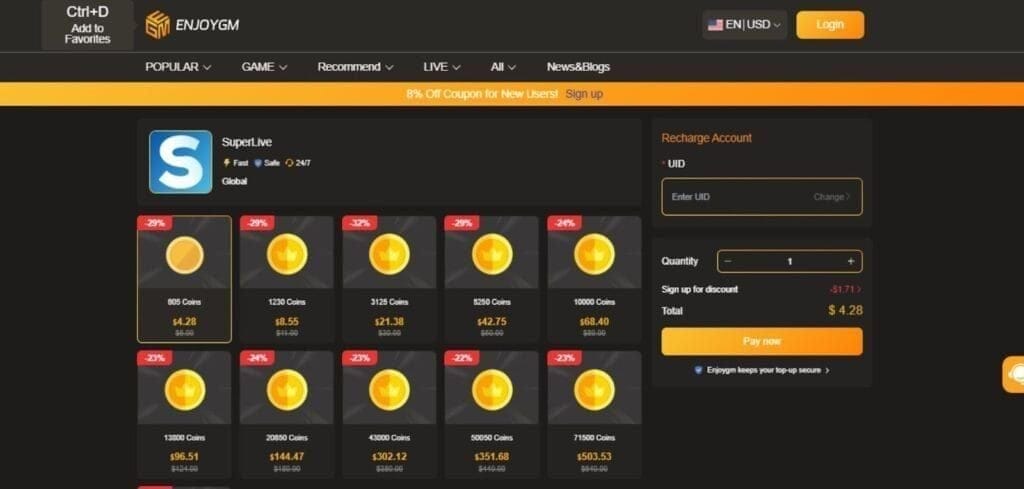
For streamers building their gifting ecosystem, discount superlive coins purchase through buffget offers competitive pricing, fast delivery, and secure transactions — reducing friction when coordinating gifting events with your community.
The Proven Retention Framework
Three-Act Structure for 90–150 Minute Broadcasts
Align your content pacing with the algorithm's evaluation tiers:
- Act One (0–20 min): High-energy hook, immediate value, establish the session's central goal
- Act Two (20–80 min): Core content with planned re-engagement spikes every 15–20 minutes
- Act Three (80–150 min): Community-focused content, milestone resolution, loyalty rewards for viewers who stayed
Each tier encounters a stream that's actively performing, not coasting on early momentum.
Mapping Engagement Peaks Across Your Timeline
Schedule peaks — don't improvise them:
- 25-minute mark: Gifting milestone announcement (Tier 1/Tier 2 transition)
- 45-minute mark: Poll launch to reset passive viewer attention
- 70-minute mark: Q&A segment targeting loyal Tier 3 audience
- 90–120 minute mark: Final gifting push targeting King badge threshold (10,000 coins in 30 minutes)
Pro tip: The Emperor badge activates at 90,000–120,000 cumulative coins and represents a major algorithmic and social signal. Structure progressive gifting milestones to create a narrative arc that anchors viewers until objectives are met.
Hybrid Content Segments That Reset Attention
Rotating between three segment types yields 20–50% higher algorithmic performance than single-format streams:
- Challenge segments: High unpredictability, drives chat reactions
- Tutorial/breakdown segments: High informational value, attracts new viewers mid-stream
- Community interaction segments: Polls, Q&A, chat games — converts passive viewers to active participants
Each format switch acts as a soft re-entry point for drifted viewers and diversifies the engagement signal types the algorithm receives.
Interactive Features That Lock Viewers In
Polls: Micro-Commitment Moments
When a viewer votes, they create psychological stake in the outcome — making them more likely to stay for the result. Launch polls at 25 and 55 minutes to interrupt the drop-off curve. Keep questions tied to your content: Should I attempt hard mode next? outperforms generic personality polls because it gives viewers agency over the broadcast's direction.
Milestone Goals as Commitment Devices
Viewers who see a progress bar moving toward a tangible goal — a coin total, challenge unlock, or community reward — are motivated to stay and contribute. Structure milestones in ascending tiers so achieving one immediately reveals the next. This creates continuous forward pull across the full broadcast.
Chat Games That Drive Unique Chatter Breadth
Prediction contests, trivia rounds, and reaction challenges convert passive viewers into active participants. The 30%+ unique chatter requirement means you need breadth, not just depth from core fans. Chat games lower the barrier for casual viewers who wouldn't otherwise type.
For reliable coin top-ups when managing your SuperLive gifting ecosystem, the superlive top up center online at buffget provides a trusted, high-rated service with wide coverage and responsive customer support.
Chat Management for Long Broadcasts
Responding Without Breaking Flow
The 60% response rate within 3 minutes is achievable without derailing content — but it needs a system. Batch acknowledgments: address three to five messages together rather than stopping for each one. Use viewer names when responding. Name recognition is a powerful retention signal — viewers who feel personally acknowledged are more likely to stay and return.
Moderator Roles as Algorithmic Tools
Active moderation isn't just community management — it's algorithmic. Moderators who highlight quality questions, remove spam, and prompt shy viewers to engage help maintain the 30%+ unique chatter threshold. Assign at least one moderator per 100 concurrent viewers during long broadcasts.
Handling Slow Chat Periods
Slow chat is predictable and preventable. When density drops, deploy a direct prompt: ask a specific question, launch a poll, or announce an upcoming milestone. Even Where are you watching from? can restart chat momentum within 60–90 seconds.
Technical Optimization
Stream Quality Essentials
Technical friction silently kills retention:
- Minimum 1080p webcam resolution required
- Wired Ethernet connection — non-negotiable for broadcast stability; wireless introduces latency variance that degrades real-time interaction quality
- Supported software: OBS Studio, Streamlabs OBS, XSplit Broadcaster — all offer scene-switching for smooth format transitions
Overlay and Alert Design
Overlays should surface milestone progress, recent gifters, and chat highlights without obscuring primary content. Alert animations for coin gifts reinforce gifting behavior — but keep animation duration under 3 seconds to avoid disrupting stream flow.
Reading Analytics to Improve Retention
Live Metrics to Monitor
During a broadcast, watch these three indicators:
- Concurrent viewer trend line: Declining slope = content fatigue — deploy a re-engagement tactic immediately
- Chat messages per minute: Below 15? Trigger a poll or direct question now
- Coin gift frequency: Gaps longer than 10 minutes suggest milestone goals need refreshing
Post-Stream Drop-Off Analysis
Cross-reference drop-off timestamps with your content log. If tutorial segments consistently show drop-off spikes, shorten them. If challenge segments show retention peaks, schedule more. Implement one structural change per session and run a 30-day testing cycle — improvements compound measurably over time.
Off-Stream Habits That Drive On-Stream Retention
Consistent scheduling is foundational. The platform's monthly requirements — 15 hours minimum and 12 separate broadcasts — reflect the minimum activity level needed to build habitual viewership.
- Post pre-stream announcements 24–48 hours before each broadcast
- Share highlight clips from previous sessions to create anticipation loops
- Remind your audience of loyalty point accumulation during broadcasts — it reinforces the value of staying and returning
Your SuperLive Retention Action Plan
Pre-Broadcast Checklist
- Account level 35 or above confirmed
- Wired Ethernet active, 1080p webcam confirmed
- Three-act content structure mapped with engagement peaks scheduled
- Milestone goals set with coin thresholds tied to broadcast segments
- Moderator briefed on chat management responsibilities
- Pre-stream announcement published 24 hours prior
30-Day Testing Framework
- Week 1: Baseline broadcast using current format, record all retention metrics
- Week 2: Implement three-act structure with scheduled engagement peaks
- Week 3: Add milestone goals and structured chat games
- Week 4: Analyze drop-off heatmaps, implement one structural change, retest
Frequently Asked Questions
What's the ideal broadcast length for maximum SuperLive algorithm reach? 90–150 minutes. This window aligns with all three algorithmic evaluation tiers while maintaining the engagement density required for strong distribution scores.
What are the exact viewer retention thresholds the algorithm requires? 70% at 10 minutes, 50% at 30 minutes, 35% at 60 minutes. Failing any threshold reduces algorithmic distribution at that tier.
How does gifting affect algorithm visibility? Coins carry 10–15x the weight of likes or shares. VIP Level 75–85 gifters provide 25–30% distribution multipliers; Level 100 gifters provide 40–50%. Viral distribution requires 10,000–20,000 coins from diverse gifters within any 30-minute window.
Does chat activity directly influence ranking? Yes. The algorithm requires 15–25 messages per minute with 30%+ from unique chatters. Sustained drops below this floor trigger downranking in the recommendation feed.
What's the minimum account level for meaningful algorithmic traction? Level 35. Below this threshold, distribution is reduced regardless of content quality or engagement metrics.
How often should I update my broadcast strategy? Review post-broadcast analytics after every session and implement one structural change per cycle. Run a full strategy audit monthly, aligned with the 12-broadcast monthly requirement, to identify patterns across your full content history.