

Recommended Discounts

Where Winds Meet
This Top Up service is not applicable to Playstation User.
20% OFF
Related articles


Where Winds Meet Auction Sniping Guide: Ingot Costs 2026
Master guild auction sniping in Where Winds Meet with strategic timing, precise ingot budgeting, and server economy insights. This guide reveals exact cost ranges for legendary and epic relics, proven last-second bidding techniques, and budget optimization across all player types.
Buffget
Understanding Guild Auction Sniping
What Is Auction Sniping
Auction sniping means placing winning bids in the final seconds to minimize competition and secure top-tier relics at optimal prices. Unlike early bidding that signals intent, sniping exploits competitor hesitation and reduces counter-bid windows. Essential for legendary martial codices and large tuning stones that directly impact combat effectiveness.
CN version auction houses allow currency trading for premium items including ingots and relics. Players who master sniping acquire legendary items (yellow indicators) at 30-40% below peak prices.
For reliable ingot reserves, Where Winds Meet Ingots top up through buffget provides competitive pricing and instant delivery.
Guild Auction Economy Overview
Guild auctions unlock at level 20, but meaningful participation requires level 40+ and accumulated ingots. Guild prosperity levels determine listing quality—level 3 guilds need 30,000 prosperity for premium relic categories.
Three guild types influence dynamics:
- Bladesworn Gang: PvP focus, high weapon material demand
- Changle Pavilion: Leisure emphasis, cosmetic item markets
- Farshore Hall: Exploration priority, cultivation material demand
Guild facilities impact participation. Hall of Heroes increases treasure token rates. Cargo Warehouse expands fund storage. Guild Chamber sets member capacity, affecting competition intensity.
Guild Auctions vs World Market
Guild auctions require 20 minutes weekly at guild bases, filtering casual participants. CN auction houses enable fluid currency trading establishing real-time valuations. Global version uses pearl shop for direct purchases.
Fixed duration timers with no extensions make final-second sniping viable. Bid increments follow percentage-based scaling. Buyout prices exceed competitive outcomes by 50-80%—inefficient except for urgent needs.
Guild shop materials like Ebon Iron Lv.1/Lv.2 provide baseline pricing. When auctions fall below guild shop treasure token rates, they're guaranteed value.
Accessing the Auction Interface
Requirements and Prerequisites
Creating guilds costs 300 Echo Jade at level 20. Guild masters pay daily maintenance scaling with membership—disbandment after 7 days without upkeep.
Weekly contribution quotas unlock higher rarity categories. Complete weekly tasks for guild rankings granting priority notifications for legendary items.
Guild level 3 with 30,000 prosperity provides full functionality: historical price tracking, multi-parameter searches, automated bid notifications.
Interface Breakdown
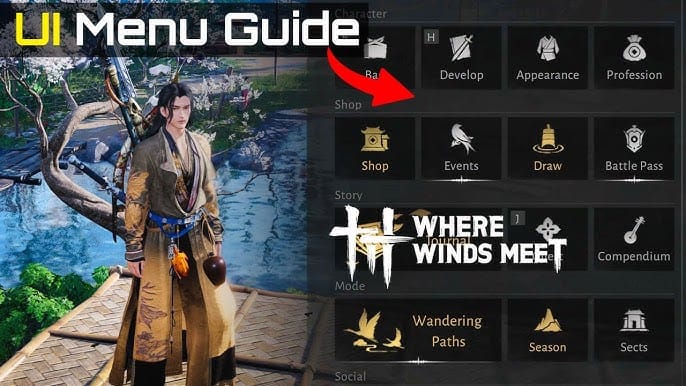
Rarity color coding: yellow (legendary), purple (epic). Filters include rarity tier, item category, price ranges, time remaining. Advanced search supports specific names: Legendary Martial Codex I/II, Large Tuning Stone: Doom/Gold Inlay.

Watchlist tracks 20 simultaneous auctions with customizable notifications. Set alerts for final 5-minute windows on legendary items.
Bid history reveals competitor patterns. Round numbers (10,000, 15,000 ingots) signal psychological ceilings. Irregular amounts (12,347, 18,923) show calculated assessments.
Real-Time Notifications
Priority settings: legendary relics within budget, epic items 20%+ below averages, final 2-minute countdowns on watchlist items.
Peak activity: 7-10 PM server time (intense competition). Off-peak windows (2-6 AM) generate 40-60% fewer bidders.
Mobile notifications enable away-from-game response but add 2-3 seconds network lag versus desktop.
Relic Rarity Tiers and Price Benchmarks
Rarity System
Five tiers: Common (white), Uncommon (green), Rare (blue), Epic (purple), Legendary (yellow).
Epic relics: advanced cultivation materials, mid-tier manuals, weapon components. Legendary relics: Legendary Martial Codex I/II, Large Tuning Stone: Doom/Gold Inlay—endgame optimization items.
Legendary items can't be crafted through standard systems, making auctions primary F2P acquisition method.
Starting Bid Ranges
Rare tier: 500-1,500 ingots start, 2,000-5,000 final prices.
Epic tier: 2,000-5,000 start, 8,000-15,000 final. High-demand items exceed 12,000 during peak hours. Off-peak can close below 7,000 with fewer than three bidders.
Legendary tier: 8,000-12,000 start. Final prices vary dramatically. New legendary items reach 40,000-50,000+ as whales compete. Established legendaries stabilize at 18,000-28,000.
For competitive bidding power, buy cheap Ingots WWM at buffget with secure transactions and excellent service.
Server-Specific Variations
Mature servers show 25-35% lower legendary prices versus new servers. Increased supply from veterans creates buyer-favorable conditions.
New servers experience inflated prices first 60-90 days. Legendaries routinely exceed 35,000 ingots. Patient players delaying until month 3-4 save substantially.
Regional economies reflect spending patterns. Whale-heavy servers sustain elevated prices. F2P-dominant servers show rational pricing aligned with crafting costs.
Ingot Cost Estimation
Epic Relics (5,000-15,000 Ingots)
Start with crafting cost equivalency. If epic requires 6,000 ingots in materials over 2 weeks, cap bids at 8,000-9,000 accounting for time value.
Meta relevance multipliers: popular build materials experience 30-50% premiums. Monitor tier lists to predict demand spikes.
Supply assessment: 5+ weekly listings indicate healthy supply (lower prices). Once/twice weekly listings face constraints driving competitive bidding.
Legendary Relics (15,000-50,000+ Ingots)
Legendary Martial Codex I: 18,000-25,000 on mature servers
Legendary Martial Codex II: 22,000-32,000 (superior stats)
First-week new server listings: 45,000+ as whales establish advantages
Large Tuning Stone: Doom: 19,000-27,000 when weapon types dominate
Large Tuning Stone: Gold Inlay: 17,000-24,000, occasionally 15,000 off-peak
Budget 25,000 ingots for standard legendary competition. Target multiple acquisitions? Accumulate 60,000+ for flexibility.
Price Inflation Factors
Patch updates buffing items trigger 40-60% surges within 48 hours. Monitor announcements and test server data.
Seasonal events rewarding legendaries temporarily suppress prices 20-30% post-event as players liquidate duplicates.
Competitive events (guild wars, ranked PvP) elevate demand 15-25%. Off-season creates buyer-favorable conditions.
Advanced Sniping Strategies
Last-15-Seconds Technique
Optimal timing: 8-12 seconds remaining, balancing late entry against network lag. Earlier than 15 seconds gives competitors response time. Beyond 8 seconds risks connection delays.
Pre-calculate maximum bids before auction ends. Emotional final-second decisions cause overpay. Establish ceiling based on utility value, crafting costs, budget constraints—execute mechanically.
Multi-tab preparation monitors multiple ending auctions. Open separate tabs, refresh at 30-second intervals. Maximize opportunities across highest-value targets.
Psychological Warfare
Immediate counter-bidding within 5 seconds signals unlimited budget, discouraging price-sensitive players. Works best on mid-tier epics.
Irregular increments (+1,247 vs +1,000) suggest precise calculations. Competitors interpret as identified utility value, creating doubt.
Strategic silence mid-auction followed by sudden late entry creates uncertainty about bidder count. Enter final 15 seconds after extended silence.
Managing Multiple Targets
Portfolio bidding: 40% to primary target, 30% secondary, 30% split across tertiary. Increases probability of securing value while avoiding budget depletion.
Priority ranking: legendary with immediate utility highest, epic at exceptional discounts second, speculative legendary third.
Automated bid limits (where available) enable participation during unavailable periods. Reserve for secondary targets; manually execute priority snipes.
Identifying High-Value Opportunities
Recognizing Undervalued Listings
Legendaries starting below 8,000 ingots signal uninformed sellers or quick-sale intent. Attract competition but slip through off-peak.
Epics starting at 50% typical finals represent prime opportunities during low-traffic periods. Verify actual utility—some have niche applications explaining lower prices.
Red flags: below-average starts ending peak hours (7-10 PM). Inevitable multiple bidders drive prices to/above typical ranges.
Peak vs Off-Peak Timing
Peak hours (7-10 PM server): 3-5x more bidders, 25-40% higher finals. Legendaries exceed 30,000 vs identical 3 AM listings closing 20,000-23,000.
Weekend auctions experience elevated competition. Sunday late-night/Monday early-morning provide optimal windows—35-50% better success rates.
Regional time zones create advantages. Server prime time aligning with your off-hours reduces competition despite high population.
Historical Price Tracking
Maintain logs for target legendaries over 4-6 weeks. Record finals, end times, day, concurrent events. Identifies optimal windows, prevents overpay during spikes.
Seasonal patterns around monthly updates: prices spike 15-25% week before, decline 20-30% weeks 2-3 post-update as event rewards flood markets.
Comparative analysis: if Codex I consistently closes 3,000-4,000 below Codex II despite similar utility, prioritize Codex I for efficiency.
Budget Optimization by Player Type
F2P Strategy
F2P generates 8,000-12,000 ingots monthly through dailies, weeklies, achievements. Supports one legendary every 2-3 months at median prices.
Accumulate 30,000+ reserves before participation, enabling selective bidding on exceptional opportunities only. Discipline to skip marginal deals separates successful F2P from perpetually ingot-starved.
Alternative progression: guild shop materials with treasure tokens. Prioritize Hall of Heroes upgrades increasing token rates, systematically purchase Ebon Iron Lv.1/Lv.2.
Moderate Spender ($20-50/month)
Enables legendary acquisitions every 4-6 weeks while maintaining reserves. Determine when direct pearl shop purchases offer better value than auctions.
Direct purchase makes sense when auctions exceed 120% pearl shop equivalents or time constraints prevent monitoring. Auctions provide 30-50% savings off-peak.
Allocate 60% monthly budget to auctions, 40% to direct purchases for time-sensitive needs. Concentrate spending during promotional bonus periods.
Whale Counter-Tactics
Identify whale patterns: large round increments (5,000-10,000), instant responses regardless of price. Retreat immediately unless irreplaceable utility justifies premium.
Monitor multiple simultaneous legendaries—whales can't compete across 3-4 concurrent auctions. While they dominate one, alternatives proceed normally.
Target niche legendaries with narrow build applications. Less whale attention despite equivalent power for specific playstyles.
Real Gameplay Examples
Case 1: Legendary Codex II (23,400 Ingots)

Mature server, 10,000 start, 2:30 AM Tuesday ending. Historical: 28,000-32,000 peak hours. Off-peak timing suggested reduced competition. Max limit: 25,000.
Two bidders at 15 minutes. Price reached 18,000 by 5 minutes, stalled as one withdrew. At 12 seconds: 22,100. Snipe bid 23,400 at 9 seconds.
Closed 23,400—17-27% savings versus peak. Success factors: off-peak timing, pre-calculated limit, precise 8-12 second execution.
Case 2: Epic Tuning Stone (8,700 Ingots)
Saturday evening peak, 3,500 start. Typical finals: 11,000-13,000. Immediate utility justified participation, strict 10,000 ceiling.
Seven bidders drove to 7,200 within 3 minutes. Strategic silence until 30 seconds. At 25 seconds: 8,100, three bidders active.
Snipe 8,700 at 11 seconds. Two counter-bids at 6 and 4 seconds fell short. Saved 2,300-4,300 versus typical—disciplined sniping succeeds even peak hours.
Case 3: Failed Snipe Analysis
Codex I, Sunday 9 PM, 7,000 start attracted nine bidders. Max limit 24,000 based on 22,000-26,000 historical.
Rapid escalation to 19,000 by 2 minutes, slowed. At 15 seconds: 21,500. Snipe 23,000 at 10 seconds. Whale placed 28,000 at 7 seconds.
Errors: underestimated whale presence Sunday prime time, low start created false value perception, insufficient whale pattern research. Same item likely 20,000-22,000 Tuesday 3 AM.
Common Mistakes
Bidding Early
Early bidding reveals interest, provides counter-strategy time. First 50% participation signals strong intent, encouraging monitoring.
Commitment fallacy: after monitoring investment, psychological pressure to finish despite exceeding limits. Sunk cost mentality causes overpay.
Optimal: watchlist monitoring without bidding until final 15 seconds. Preserves information asymmetry, prevents premature escalation.
Overpay Trap
Competitive bidding triggers desire to win detached from value. Overpay 30-40% causes buyer's remorse, depleted budgets.
Pre-calculated maximums based on crafting equivalency, alternatives, budget prevent emotional escalation. Write limits before participation.
Successful snipers walk away from 60-70% targeted auctions when prices exceed limits. Post-auction analysis often shows winning bids exceeded rational value—validating retreat.
Network Lag
Server-client timer desyncs 1-3 seconds occasionally. Test latency during low-stakes auctions, establish compensation requirements.
Mobile connections: 2-4 seconds additional delay. Adjust to 12-15 seconds remaining vs optimal 8-12 desktop window.
Monitor connection quality before high-value snipes. Losing 25,000 legendary to preventable connection issues exceeds minor rescheduling inconvenience.
Maximizing Ingot Earning
Daily/Weekly Sources
Dailies generate 300-500 ingots: login bonuses (50-100, 30 seconds), combat challenges (150-200, 10 minutes), guild tasks (100-150, 15 minutes). 25-minute routine provides baseline.
Weekly events: 1,500-3,000 depending on depth. Guild rankings top 20%: 2,000+ ingots. Focus high-value objectives over comprehensive completion.
Seasonal events: 5,000-8,000 for full participation. Plan legendary acquisitions post-event when reserves peak and prices dip.
Emergency Farming
Achievement hunting: target incomplete offering 200+ ingots for minimal time. Generates 1,000-2,000 within hours.
Guild fund contributions convert excess materials to ingots through weekly rewards. Viable when legendary opportunities exceed typical thresholds.
Alternative character focus: pause main progression for ingot activities. Trade-offs require evaluation—reserve for exceptional listings.
ROI Comparison
Legendary at 23,000 vs 6-8 week farming: time value of immediate power increase justifies premium up to 30% above crafting equivalency.
Epic tier: craftable within 2 weeks rarely justifies 10,000+ unless immediate need. Patient players achieve better ROI self-crafting.
Opportunity cost: relics providing measurable combat power show clear ROI. Cosmetics represent lower priority after core progression satisfied.
Guild Coordination
Avoiding Internal Wars
Announce intentions 24 hours advance prevents competitive bidding among guildmates. Priority assignment based on need, contribution, equipment gaps.
Formal priority systems: members request through designated channels. Multiple desires? Transparent criteria determine priority. Non-priority abstains.
Real-time communication: announce active bidding, allowing others to redirect. Collaborative approach increases total guild acquisitions.
Priority Systems
Role-based: tanks get defensive relics, DPS offensive, support utility. Maximizes guild collective power.
Contribution-based: highest donors, task completion, facility participation earn first rights. Requires transparent tracking.
Rotation: priority recipients move lower for subsequent items. Prevents concentration, maintains motivation.
Contributing While Pursuing Goals
Prioritize guild contributions during non-auction periods. Reserve ingot expenditure for optimal personal timing.
List duplicates/outgrown items in guild auctions strengthens internal economy. Reciprocal behavior builds trust.
Transparency about budgets enables coordination. Staggered timing prevents simultaneous drain, maintains operational capacity.
FAQ
How many ingots do legendary relics cost?
18,000-32,000 on mature servers. Off-peak: 15,000-20,000. Peak wars: 40,000+. New servers: 35,000-50,000+ first 60-90 days.
Optimal sniping timing?
8-12 seconds remaining balances late entry against lag. Mobile: 12-15 seconds. Desktop stable connections: toward 8-second threshold.
How do F2P compete?
Accumulate 30,000+ reserves. Focus off-peak (2-6 AM, 40-60% less competition). Prioritize universal utility legendaries. Maintain strict maximums.
What causes price spikes?
Patch buffs: 40-60% surges within 48 hours. Competitive events: 15-25% increases. New servers: 50-80% premiums first 60-90 days. Post-event: 20-30% reductions.
Identify undervalued listings?
Compare vs guild shop token rates and crafting costs. Legendaries starting below 8,000, epics at 50% typical finals during off-peak. Track 4-6 week historical data.
Strategy against whales?
Retreat when identifying patterns (5,000-10,000 increments, instant responses). Redirect to simultaneous alternatives—whales can't cover 3-4 concurrent. Target specialized legendaries with narrow applications.
Maximize auction success with buffget's exclusive ingot packages. Competitive pricing, fast delivery, secure transactions, excellent service trusted by thousands. Visit buffget now for limited-time offers.