

Recommended Discounts

Where Winds Meet
This Top Up service is not applicable to Playstation User.
20% OFF
Related articles


Where Winds Meet Blueprint Guide: Costs & Farming 2026
This guide covers the housing blueprint system in Where Winds Meet, detailing exact material costs for construction components, optimal farming locations for Timber and Raw Ore, and strategies for unlocking the building system. Learn to efficiently gather resources, save custom blueprints, and manage rental properties while maximizing Stamina investment.
Buffget
Understanding the Housing Blueprint System
Housing unlocks at Level 25 through Building: One Last Job quest at Halo Peak, Sundara Land of Qinghe. Construction consumes Stamina alongside materials, requiring strategic resource management.
Yang Yuan, near Halo Peak Boundary Stone, starts the quest. You'll collect three pebbles, craft Stone Pagoda Piece – Top, then place components in Construction Mode. This tutorial establishes the workflow for all blueprint projects.
Buy Where Winds Meet Ingots through buffget to access premium materials and expedite construction.
Blueprint Acquisition and Saving
The Cradle Blueprint system estimates building range and preserves custom designs. Hold Diagram Area corners to extend scope, press Create Diagram to finalize. The 30x30 block space (confirmed with Space/Square) handles most projects.
Available designs:
- Low-Level Inn Design – Entry commercial structure
- Multi-Story House Design – Residential vertical build
- Tall Tower Diagram – Advanced height architecture
- Maze Diagram – Complex layouts
- Wooden Bridge Diagram – Infrastructure
- Four-Rafter House-Diagram – Traditional style
Save blueprints with ~/L3 while selecting Cradle Blueprint. This lets you replicate designs across locations without recalculating materials.
Construction Mode Controls
Activate Construction Mode: F4 (keyboard) or Function Wheel + R2 (PS5). Free Camera mode (- key/L3) enables precision placement in multi-story structures.
Recycle Mode (R/R3/Trash Can icon) recovers materials from misplaced components. Toggle structural elements with B/Triangle between walls, roofs, and foundations.
Complete Blueprint Component Costs
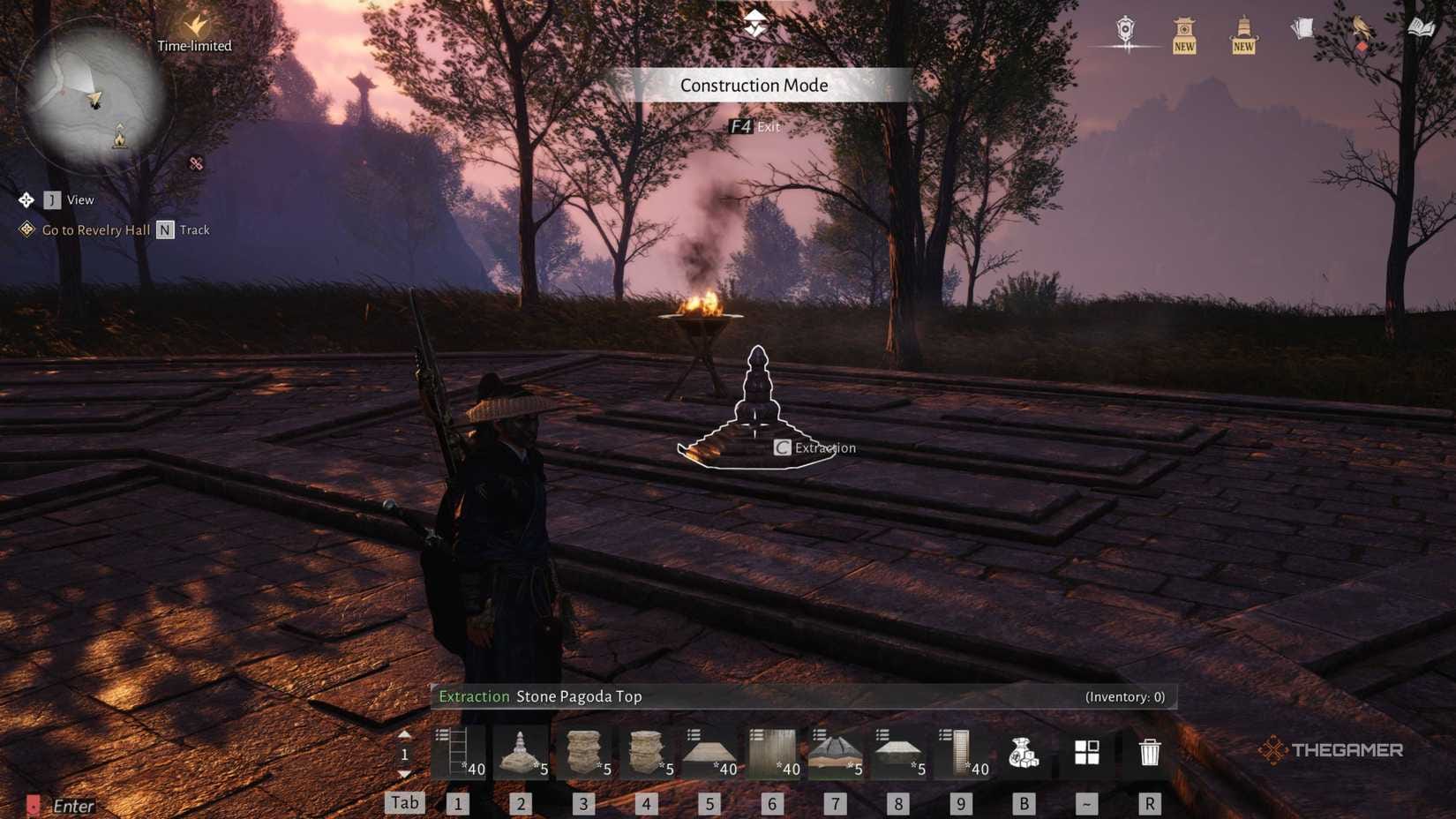
All components require Stamina plus materials. Understanding exact costs prevents mid-construction shortages.
Walls and Foundations
- Windowed Wall: 1 Stamina, 1 Timber, 1 Raw Ore
- Plank Wall: 1 Stamina, 2 Timber
- Platform: 2 Stamina, 25 Timber
- Stone Platform: 2 Stamina, 8 Raw Ore
- Wooden Stairs: 1 Stamina, 5 Timber
Platform has the highest single-item Timber cost at 25 units. Stone Platform offers a Raw Ore alternative for ore-rich players.
Roofing and Furnishings
- Hipped-Gable Roof: 2 Stamina, 8 Timber
- Desk: 1 Stamina, 2 Timber, 1 Raw Ore
- Anvil: 1 Stamina, 1 Timber, 1 Raw Ore
Anvil serves as both decoration and functional crafting station.
For substantial materials, cheap Ingots Where Winds Meet at buffget provides cost-effective acquisition with fast delivery.
Stamina Management
A modest four-room structure consuming 50 Stamina across walls, floors, and roofing requires session planning. Calculate total Stamina before starting large projects to avoid incomplete builds.
Primary Material Farming Locations
Timber and Raw Ore require different farming approaches based on distribution and respawn mechanics.
Timber Farming
Attack trees throughout the world to gather Timber—no specialized tools needed. Forest regions provide higher tree density for circuit-based farming.
Qinghe near Halo Peak offers dense coverage, letting you combine tutorial completion with initial stockpiling. This reduces travel time between objectives and gathering.
Raw Ore Extraction
Loot ore deposits in mountainous and rocky terrain. Ore nodes have longer regeneration timers than trees, requiring multi-location routes for consistent gathering.
Sundara Land of Qinghe contains accessible deposits for Level 25+ players entering the housing system.
Vertical Exploration
Building ladders to reach Redmist Beetles Oddities in Qinghe demonstrates construction-exploration interconnection. This requires initial Timber investment but unlocks rare collectibles and unique material sources.
Integrate ladder construction into permanent farming routes. This upfront Stamina and material investment pays dividends across multiple sessions.
Rental Property System
Feng's Tradehall in Southern Gate Avenue, Kaifeng City handles rentals across three tiers:
- Dwelling: 100 Coins – Single-room accommodation
- Compound: 1,000 Coins – Multi-room property
- Mansion: 10,000 Coins – Large-scale estate
This 100x price differential reflects substantial differences in space and customization. Evaluate rental costs against construction expenses to determine optimal acquisition.
NPC Recruitment and Facilities
Recruit NPCs with Please join my base followed by I'll give you money.
Functional facilities require staffing:
- Ink Facility: Chefs and waiters
- Pottery Workshop: Produces bowls and cups
- Wine-Making Facility: Creates wine
- Farm Plots: Grow ingredients (harvest with Light attack)
These transform properties into economic engines. Pottery Workshop and Wine-Making Facility generate marketable goods, while Farm Plots provide self-sufficient ingredient production.
Optimal Farming Routes
Efficient routes balance node density against respawn timers.
Qinghe Circuit
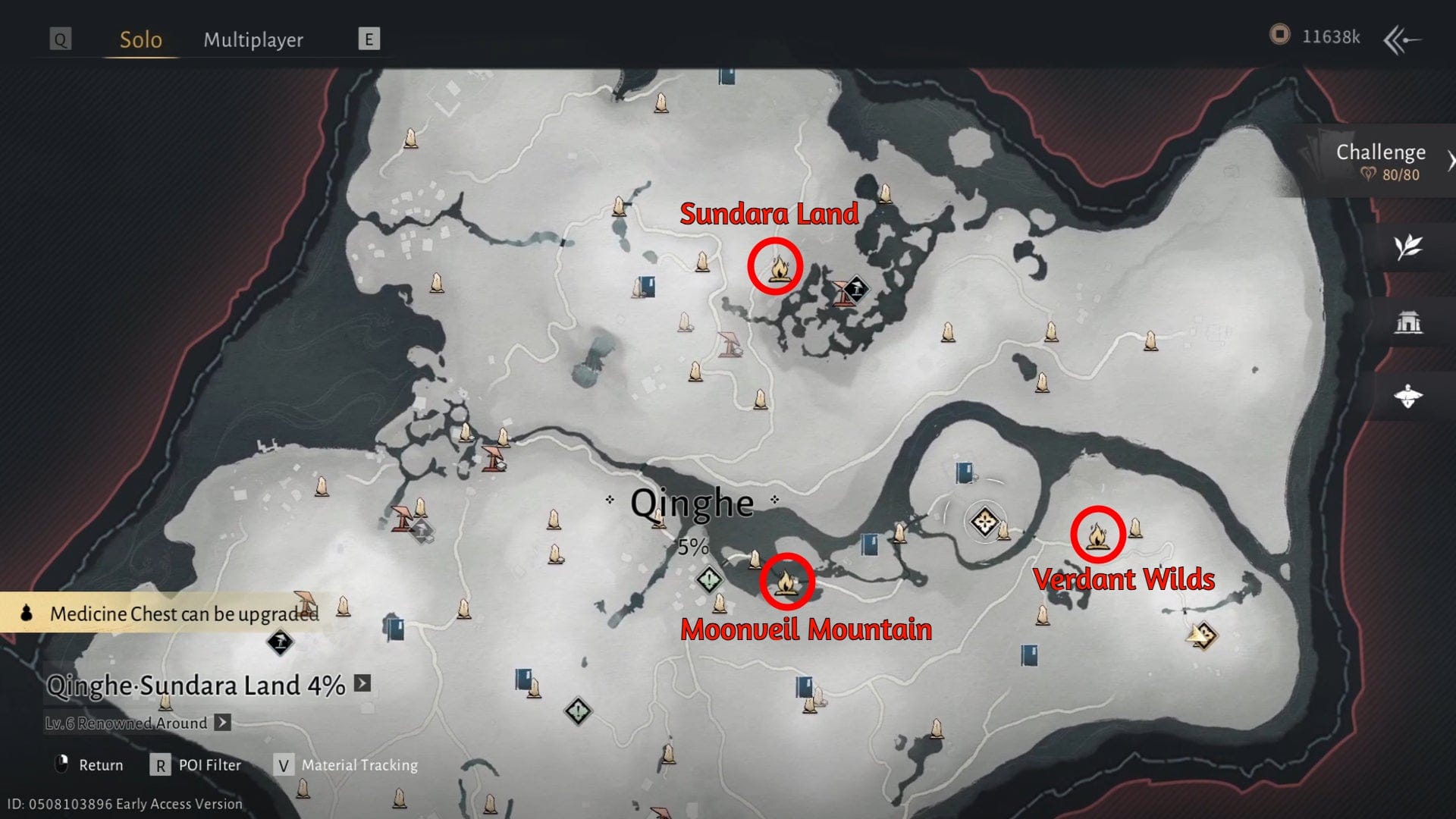
The region surrounding Halo Peak offers the most accessible integrated route. Dense forest coverage plus scattered ore deposits enable simultaneous dual-resource gathering.
Complete Qinghe circuit yields per 30 minutes:
- 150-200 Timber
- 40-60 Raw Ore
- Materials for 6-8 Windowed Walls or 3-4 Platforms
Map personal routes based on discovered nodes for location-specific clusters.
Stamina-Efficient Gathering
Prioritize gathering during high-Stamina periods. Reserve low-Stamina windows for blueprint planning, NPC recruitment, or facility management that don't consume this resource.
Route Rotation
Maintain 2-3 distinct farming circuits, rotating between them to encounter refreshed nodes continuously. By the time you complete circuits two and three, circuit one's ore deposits have regenerated.
Blueprint Priority Strategy
Not all blueprints provide equal value. Strategic prioritization accelerates functional development.
Essential Functional Blueprints First
- Basic shelter (Plank Walls + Hipped-Gable Roof) – Rental foundation
- Farm Plots – Ingredient self-sufficiency
- Pottery Workshop or Wine-Making Facility – Marketable goods
- Storage and crafting stations (Anvil, Desk) – Operational efficiency
This functional-first approach ensures investments generate returns funding subsequent improvements.
Cosmetic Blueprints: Deferred Investment
Tall Tower Diagram and Maze Diagram serve primarily aesthetic functions. These consume disproportionate materials relative to benefit, making them suitable for late-game projects.
Multi-Story House Design provides both functional space and visual appeal—a reasonable mid-progression goal.
Common Farming Mistakes
Ignoring Stamina Opportunity Costs
Don't farm materials during peak Stamina periods. Place high-Stamina activities (construction, combat) during peak energy, relegating gathering to recovery periods when Stamina regenerates passively.
Single-Material Focus
Farming exclusively Timber or Raw Ore creates imbalanced stockpiles. A player with 500 Timber but only 20 Raw Ore can't build Windowed Walls efficiently despite abundant wood.
Analyze blueprint material ratios before farming to ensure stockpile composition matches construction requirements.
Overlooking Ladder Infrastructure
Permanent ladder placement to high-value nodes reduces future gathering time substantially. Strategic deployment transforms vertical spaces into accessible farming zones—a one-time Timber investment yielding perpetual efficiency gains.
Advanced Integration Strategies
NPC Recruitment Synergy
Recruit multi-skilled NPCs who can staff different facilities as production demands shift. The Ink Facility requires both chefs and waiters—recruit diverse types early to avoid bottlenecks.
Production Chain Integration
Farm Plots (harvested with Light attack) provide ingredients for Ink Facility, Pottery Workshop, and Wine-Making Facility. This vertical integration reduces vendor dependence while creating value-added products.
A fully integrated economy cycles ingredients through facilities, generates marketable goods, sells products for Coins, then reinvests profits into expanded facilities or additional properties.
Rental Income Reinvestment
Initial Dwelling rentals at 100 Coins provide modest returns. Systematic reinvestment enables portfolio expansion toward Compound (1,000 Coins) and Mansion (10,000 Coins) properties. Each tier multiplies rental income potential.
Maintain diversified portfolios across all three tiers for stable income streams.
Material Storage Best Practices
Dedicated Storage Organization
Separate construction materials from combat equipment and consumables. Dedicated containers near construction sites reduce travel time.
Establish standardized storage systems across properties for muscle-memory efficiency.
Pre-Construction Staging
Stage all required materials near the construction site before starting. Calculate total requirements using blueprint specs, then gather 10-15% surplus for design adjustments or errors.
Time Investment Analysis
Materials Per Hour
Average gathering rates in optimal locations:
- Timber: 300-400 units/hour in dense forests
- Raw Ore: 80-120 units/hour in mountains
- Combined farming: 200 Timber + 60 Raw Ore/hour in integrated routes
Expert players with mapped routes achieve 20-30% higher rates.
Blueprint Completion Timelines
Estimated times for common projects:
- Basic four-wall shelter: 2-3 hours (gathering + construction)
- Multi-room Compound: 8-12 hours across sessions
- Fully furnished Mansion: 25-35 hours including facilities
Add 20-30% buffer for unexpected shortages or revisions.
Alternative Material Acquisition
Rental Property Revenue Conversion
Rental income purchases materials from vendors when available, converting passive Coins into construction resources. Mansion owners generate sufficient income for substantial purchases.
NPC Facility Production
Pottery Workshop and Wine-Making Facility outputs generate Coins through sales, converting to purchased materials. Wine-Making Facilities typically offer superior Coin-per-time ratios.
FAQ
How much Stamina does building a basic house require?
A basic four-wall house with roof requires 12-16 Stamina: 4 for Plank Walls, 2 for Platform, 2 for Hipped-Gable Roof, plus 4-8 for stairs and furnishings. Budget 20 Stamina including contingency.
Where's the best Timber farming location near housing unlock?
Forest areas surrounding Halo Peak in Sundara Land of Qinghe provide optimal Timber immediately after unlocking at Level 25. Dense coverage within short travel of Yang Yuan's quest start.
Can I save and reuse custom blueprints?
Yes. Press ~/L3 while selecting Cradle Blueprint to save designs for replication. Saved blueprints preserve exact placement and material requirements.
What's the most cost-efficient rental for new players?
The 100-Coin Dwelling requires minimal investment while providing basic functionality. Accumulate 3-5 Dwellings before upgrading to Compounds—multiple low-tier properties generate more stable income.
How do I recruit NPCs for facilities?
Approach NPCs and say Please join my base, followed by I'll give you money. Recruited NPCs staff facilities like Ink Facility, Pottery Workshop, or Wine-Making Facility.
What materials build ladders for vertical exploration?
Wooden Stairs require 1 Stamina and 5 Timber per unit. Complete ladder systems to reach Oddities or elevated nodes typically consume 15-25 Timber—worthwhile infrastructure for repeated farming efficiency.