

Recommended Discounts

Where Winds Meet
This Top Up service is not applicable to Playstation User.
20% OFF
Related articles


Where Winds Meet: Merchant vs Architect Ingot Farm Guide
Choosing between Merchant and Architect professions in Where Winds Meet directly impacts your Ingot farming efficiency. Merchant offers active income through Everjoy Market trading, caravans, and goods transport. Architect generates passive revenue through base construction and NPC recruitment, with merchant NPCs yielding 10,000 Coins weekly toward a 175,000 total cap. This comparison analyzes hourly rates, investment costs, and playstyle compatibility to maximize wealth generation.
Buffget
Understanding Ingots in Where Winds Meet Economy
Ingots represent premium currency in Where Winds Meet's economy. Unlike standard Coins from quests and combat, Ingots facilitate high-tier transactions including rare blueprints, advanced crafting materials, and exclusive marketplace items. Your profession choice determines Ingot accumulation rate—optimized players see 3-4x faster wealth accumulation.
The dual-currency system creates distinct wealth-building pathways. Coins serve immediate needs like repairs and supplies, while Ingots unlock strategic advantages through profession-specific revenue. Both Merchant and Architect generate Ingots through different mechanisms: Merchant via active Everjoy Market trading, Architect through base construction and NPC management.
For immediate premium resource access, Where Winds Meet top up through buffget provides competitive pricing and instant delivery, jumpstarting profession investment while building organic income.
Primary Ingot Sources
Merchant income derives from active participation: buying undervalued goods, transporting between regions, selling at premium prices, and escorting caravans for commission. This creates variable income dependent on market conditions and engagement time.
Architect income centers on base construction and NPC management. After reaching Level 25 and unlocking construction through One Last Job quest at Halo Peak with NPC Yang Yuan, you establish revenue-generating bases. Process requires collecting three pebbles, crafting Stone Pagoda Piece – Top, then accessing Construction Mode via F4 and Free Camera with ~ key.

Weekly income cap of 175,000 Coins applies universally, but professions reach this through different effort-to-reward ratios. Merchants achieve cap through high-frequency trading, while Architects leverage passive NPC income requiring minimal daily interaction once established.
Currency Conversion Mechanics
Base construction costs scale dramatically:
- Dwellings: 100 Coins
- Compounds: 1,000 Coins
- Mansions: 10,000 Coins
These unlock NPC recruitment slots—each merchant NPC generates 10,000 Coins weekly, leisure activities contribute 5,000 Coins each.
Material economy impacts both professions. Qinghe Circuit yields 300-400 Timber and 80-120 Raw Ore hourly, with Timber nodes respawning every 5 minutes, Raw Ore every 7 minutes. Efficient farming reduces construction costs, accelerating passive income generation.
Precision placement using ~ Free Camera reduces material waste by 10-15%, critical for Architects managing tight budgets. This compounds over dozens of projects into thousands of saved Coins.
Merchant Profession: Complete Breakdown
Core Mechanics and Income Streams
Merchant operates through four activities:
- Buying goods at regional markets
- Selling goods at premium locations
- Transporting goods between trade hubs
- Escorting caravans for protection fees
Regional specialties sell at 40-60% markup in distant markets, but transport time and caravan risk factor into profits. Successful trade routes generate 2,000-3,000 Coins per round trip, requiring 15-25 minutes including travel, negotiation, and potential combat.
Caravan escort missions provide guaranteed income with lower margins. Standard contracts pay 800-1,200 Coins for 10-15 minute routes, offering consistent revenue for players preferring predictable earnings over speculative trading.
Trade Route Optimization
Optimal routes balance distance, profit margin, and safety:
- Short routes (adjacent regions): 500-800 Coins per trip, minimal risk, 8-12 minutes
- Medium routes (two regions): 1,500-2,500 Coins, 20-30 minutes, bandit encounters
- Long routes (opposite corners): 4,000-6,000 Coins, 45-60 minutes, significant combat required
Market price fluctuation follows server-wide supply-demand patterns. Tracking oversupplied goods in your region and undersupplied in target markets creates arbitrage opportunities. Players monitoring trends weekly identify recurring patterns for consistent profits.
Caravan Management
Escort missions scale in difficulty and reward:
- Low-tier: 600-900 Coins, minimal combat, basic equipment viable
- High-tier: 2,500-4,000 Coins, aggressive NPC bandits, coordinated defense required
Completing routes without cargo damage provides 15-25% bonus payments. Players investing in crowd control and defensive positioning consistently achieve these bonuses, increasing hourly rates by 300-500 Coins.
Failed escorts result in partial payment loss and reputation penalties, temporarily reducing premium contract access.
Skill Tree Priority
Merchant skill tree branches into Trading Acumen, Transport Efficiency, and Negotiation Mastery:
Trading Acumen (priority 1): Increases carrying capacity and reduces transaction fees, directly impacting every trade's profit margin.
Transport Efficiency (priority 2): Unlocks faster mount speeds and reduced stamina consumption, cutting travel time 20-30%. Allows 4-5 trade runs in time previously required for 3.
Negotiation Mastery (priority 3): Provides percentage-based discounts on purchases and premiums on sales. Fully developed tree adds 8-12% to every transaction, compounding into tens of thousands of additional Coins monthly.
Architect Profession: In-Depth Analysis
Crafting Income Generation
Architect income derives from two sources:
- Passive NPC merchant income: 10,000 Coins weekly per NPC without daily interaction beyond setup
- Direct construction sales: Blueprint crafting creates sellable assets
Building construction requires material and stamina management:
- Basic shelter: 46 Timber, 9 Stamina
- Reinforced four-room: 60 Timber, 40 Raw Ore, 35 Stamina
Stamina limitation caps daily construction volume, making material efficiency critical. Blueprint crafting creates sellable assets—rare blueprints acquired through exploration or reputation can be reproduced and sold at premium prices.
Blueprint Acquisition
Blueprints unlock through:
- Quest rewards
- Reputation vendor purchases
- World exploration discoveries
- Player trading
Blueprint saving system (~/L3 Cradle Blueprint) allows preserving custom designs for reproduction. Players perfecting efficient layouts reproduce them rapidly, reducing construction time and increasing daily output.
Rarity tiers correlate with costs and prices:
- Common: 50-100 Coins reproduction, 200-400 Coins sale price
- Rare: 500-800 Coins reproduction, 3,000-5,000 Coins sale price
Material Sourcing
Qinghe Circuit optimal farming yields:
- 150-200 Timber per 30 minutes
- 40-60 Raw Ore per 30 minutes
- Total hourly: 300-400 Timber, 80-120 Raw Ore (sufficient for 6-8 basic structures or 2-3 reinforced buildings)
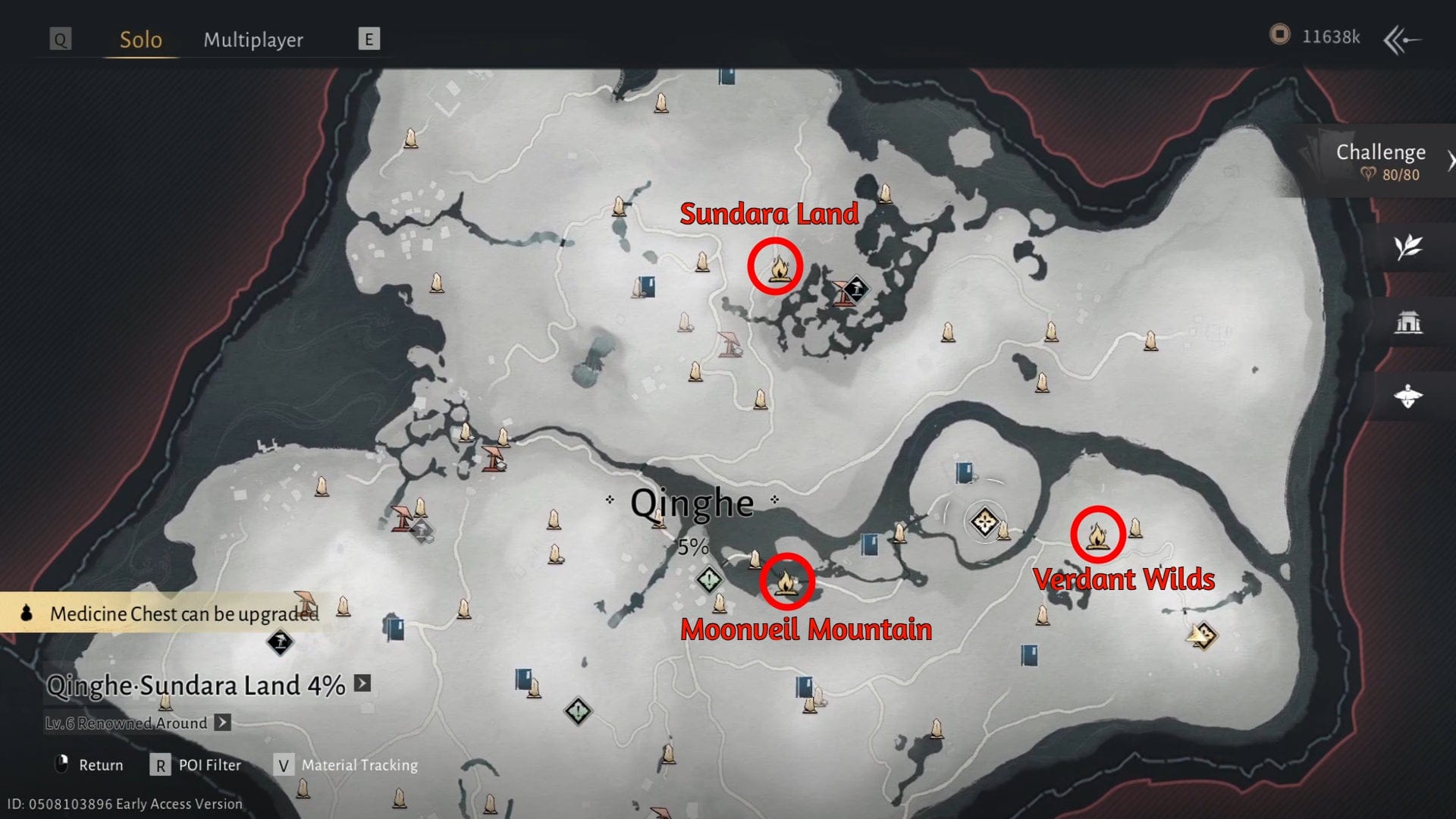
Resource node respawn optimization: Timber nodes respawn every 5 minutes, Raw Ore every 7 minutes. Experienced Architects map 15-20 node locations, creating continuous gathering loops eliminating downtime.
Material cost breakdown:
- Plank Walls: 2 Timber, 1 Stamina
- Platforms: 25 Timber, 2 Stamina
- Stone Platforms: 8 Raw Ore, 2 Stamina
- Hipped-Gable Roofs: 8 Timber, 2 Stamina
- Windowed Walls: 1 Timber, 1 Raw Ore, 1 Stamina
Reputation Benefits
Higher reputation tiers reduce material costs 5-15%, directly improving profit margins. Reputation grinding requires completing faction quests and donating constructed buildings. While time-intensive initially, permanent cost reductions and blueprint access create long-term advantages. Architects investing 20-30 hours in reputation see 25-40% faster income growth over subsequent months.
Elite reputation unlocks legendary blueprints unavailable elsewhere, commanding premium prices in player markets.
Direct Comparison: Merchant vs Architect Rates
Hourly Earnings by Tier
Beginner:
- Merchant: 1,200-1,800 Coins hourly through basic trading
- Architect: Effectively zero during first 10-15 hours (setup phase with negative cash flow)

Mid-Tier:
- Merchant: 3,500-5,000 Coins hourly (optimized routes and selective escorts)
- Architect: 3,400-5,450 Coins per active hour (2-3 merchant NPCs generating 20,000-30,000 weekly passive + 1-2 hours active construction)
Endgame:
- Merchant: 8,000-12,000 Coins hourly (market mastery and rare goods control)
- Architect: 10,000-16,500 Coins per active hour (approaching 175,000 weekly cap via 17-18 NPCs + selective blueprint sales)
Peak Efficiency Scenarios
Merchant peak: Server events creating supply shortages. Players stockpiling event-relevant goods achieve 20,000-30,000 Coins hourly during 2-4 hour event windows (requires market prediction and capital reserves).
Architect peak: Multiple high-value blueprint commissions aligning with NPC income collection. Collecting 25,000 Coins weekly NPC income while completing 3-4 rare blueprint sales at 4,000-5,000 Coins each generates 37,000-45,000 Coins in 3 hours (12,300-15,000 hourly equivalent).
Initial Investment and Time-to-Profit
Startup Costs
Merchant:
- Initial inventory: 5,000-8,000 Coins
- Essential skill tree nodes: 15,000-25,000 Coins
- Total: 20,000-33,000 Coins
- Optional mount upgrade: 10,000-15,000 Coins (30-40% travel time reduction)
Architect:
- Level 25 unlock + quest completion: 15-25 hours
- First Mansion construction: 10,000 Coins + materials (200 Timber, 80 Raw Ore)
- Material gathering: 3-5 hours or 3,000-5,000 Coins market purchase
- Total first NPC: 13,000-15,000 Coins + time
- Scaling to 3-4 NPCs: 30,000-40,000 Coins + 600-800 Timber + 240-320 Raw Ore
Break-Even Timeline
Merchant: 5-10 hours (first successful trade routes generate profit above initial investment)
Architect: 50-70 hours when cumulative passive NPC income surpasses total construction investment (assumes personal material gathering; extends to 80-100 hours if purchasing materials)
For faster endgame access without extended break-even periods, buy Where Winds Meet Ingots through buffget for secure transactions and excellent customer service at competitive pricing.
Resource Allocation
New players: Allocate first 10,000 Coins toward Merchant starter inventory or Level 25 progression acceleration for Architect.
Intermediate players: Reinvest 60-70% of profession earnings into development (skill trees for Merchants, NPC recruitment for Architects). Remaining 30-40% funds equipment upgrades.
Advanced players: Once approaching weekly caps, shift allocation toward secondary professions or alternative wealth systems.
Playstyle Compatibility
Active Daily Players (3+ hours)
Merchant maximizes potential for active players. Income scales linearly with time—more hours enable more routes, escorts, and market monitoring. Suits players enjoying dynamic gameplay with variable outcomes and those with irregular schedules who can dedicate concentrated sessions (4-hour Saturday marathon equals distributed 1-hour daily sessions).
Casual Gamers (5-10 hours weekly)
Architect excels for limited playtime or inconsistent schedules. Once NPC infrastructure is established, weekly income generates regardless of login frequency. Casual Architects collecting 175,000 weekly caps maintain sufficient income for progression without lifestyle commitment.
Also suits players preferring construction and creative expression over trading mechanics, providing dual value from profession choice.
Combat-Focused Players
Merchant requires moderate combat capability for caravan escorts and bandit encounters, integrating better with combat-oriented playstyles.
Architect minimizes combat requirements—Qinghe Circuit gathering involves minimal enemies, base construction occurs in safe zones. However, combat players with limited time for economic activities benefit more from Architect's passive systems (2 hours weekly material gathering generates comparable income to 6-8 hours active Merchant trading).
Guild-Oriented Players
Merchant: Coordinate bulk trade operations with guild members, pooling resources for large-scale market manipulation. Cooperative approach increases profit margins 15-25% through volume discounts and coordinated selling.
Architect: Contribute to guild infrastructure projects. Guilds often subsidize Architect material costs in exchange for construction services, effectively increasing profit margins while strengthening guild capabilities.
Advanced Optimization
Market Timing (Merchant)
Track weekly market cycles—most servers show consistent demand spikes for specific goods on weekends when populations peak, creating 20-30% premiums over weekday prices.
Seasonal events create dramatic disruptions. Players stockpiling event-relevant materials 2-3 weeks before announcements achieve 200-400% returns when demand surges.
Demand Forecasting (Architect)
Blueprint demand correlates with server progression:
- New servers: High demand for basic construction blueprints
- Mature servers: Demand for rare decorative blueprints
Guild expansion cycles create commission opportunities. Monitor guild recruitment announcements and territory acquisitions to identify guilds likely commissioning large-scale projects.
Secondary Profession Synergies
Merchant + Gathering: Vertical integration eliminates purchase costs, increasing profit margins 30-50%.
Architect + Crafting: Produce furniture and decorative items. Constructing buildings then furnishing with self-crafted items creates complete packages commanding premium prices.
Optimal synergy occurs when secondary profession requires 20-30% of playtime, supporting primary without diluting focus.
Server Economy Adaptation
High-population servers: Competitive markets with thin margins but high volume. Merchants focus on volume trading with 8-12% margins. Architects benefit from consistent blueprint demand.
Low-population servers: Wider margins due to limited competition but slower transaction velocity. Architects command premium prices due to scarcity.
Server age: New servers favor Merchant (players lack capital for construction). Mature servers provide better Architect opportunities through consistent demand for advanced blueprints.
Common Mistakes
Misleading Claims
Generic best profession recommendations ignore playstyle compatibility and time investment variables. Short-term income comparisons mislead—Merchant's immediate profitability appears superior during first 20-30 hours, but Architect's exponential growth through NPC scaling surpasses Merchant at 60-80 hour marks.
Peak efficiency scenarios presented as typical performance create unrealistic expectations. Merchant claims of 15,000 Coins hourly reference perfect market conditions during events, not sustainable daily rates.
Overlooked Profit Sources
Merchants: Ignore escort mission bonuses for damage-free deliveries (15-25% additional income). Minimal skill points in defensive abilities and learning enemy spawn patterns consistently achieve bonuses.
Architects: Underutilize blueprint saving system, repeatedly constructing from scratch rather than reproducing saved designs. This doubles construction time, effectively halving hourly income. Spending 2-3 hours perfecting layouts then reproducing increases output 80-120%.
Both overlook reputation benefits. The 5-15% cost reductions compound across thousands of transactions into tens of thousands saved Coins.
Profession Switching Pitfalls
Switching before break-even wastes initial investment. Players abandoning Architect at 30-40 hours miss the 50-70 hour inflection point where passive income accelerates.
Switching costs include lost skill tree investments and reputation (20,000-40,000 Coins + 30-50 hours progression). Only viable when new profession offers dramatically superior long-term returns.
Emotional switching based on short-term frustration rather than analysis leads to cycling preventing mastery. Commit to 100-hour evaluation periods before considering switches.
Making Your Decision
Decision Framework
Prioritizing immediate income: Select Merchant. Instant profitability and linear scaling provide consistent returns without extended investment, ideal for uncertain long-term commitment.
100+ hour commitment horizon: Choose Architect. Passive systems generate superior Coins-per-active-hour after initial investment, freeing time for other activities while maintaining economic competitiveness.
Gameplay preference: Merchant for dynamic decision-making and variety. Architect for systematic optimization and creative expression.
When to Switch
Profession switching viable when playstyle fundamentally changes (1-hour daily sessions transitioning to 4-hour sessions might justify Architect to Merchant switch).
Major game updates rebalancing profession economics can justify switches. Recalculate break-even timelines if patch notes indicate significant nerfs/buffs.
Reaching weekly Coin caps consistently signals mastery and potential switching opportunity for new progression pathways.
Long-Term Roadmap
Months 1-2: Foundation—Merchants develop skill trees and establish routes, Architects complete initial construction and recruit first 2-3 NPCs. Prioritize reinvestment over consumption.
Months 3-4: Optimization—Merchants refine efficiency and develop market timing, Architects scale NPC networks toward weekly cap and develop blueprint libraries. Profit margins increase 40-60%.
Months 5+: Maturity—Primary profession generates consistent income with minimal optimization remaining. Diversify into secondary professions or alternative wealth systems.
FAQ
Which profession makes more Ingots per hour? Architect generates 10,000-16,500 Coins per active hour at endgame through passive NPC income plus selective construction. Merchant produces 8,000-12,000 hourly through active trading. Merchant offers higher absolute income for players with 5+ hours daily playtime.
How much does Merchant startup cost? 20,000-33,000 Coins total: 5,000-8,000 for initial inventory plus 15,000-25,000 for essential skill nodes. Players generate profit immediately with starter inventory, reinvesting earnings over 20-30 hours.
What is Architect profit margin? Merchant NPCs provide pure passive income of 10,000 Coins weekly each with zero ongoing costs after recruitment. Blueprint sales generate 150-300% margins on common blueprints, 400-600% on rare blueprints after material and reproduction costs.
Can you switch professions without losing progress? Switching forfeits profession-specific skill investments (20,000-40,000 Coins) and reputation but preserves general character progression. Architects retain constructed bases and recruited NPCs, maintaining passive income even after switching.
What materials do Architects need? Primarily Timber and Raw Ore. Basic structures require 46 Timber and 9 Stamina, reinforced buildings need 60 Timber and 40 Raw Ore. Qinghe Circuit yields 300-400 Timber and 80-120 Raw Ore hourly, sufficient for 6-8 basic structures or 2-3 reinforced buildings daily.
Is Merchant or Architect better for casual players? Architect suits casual players through passive income. Once 3-4 merchant NPCs recruited (40-60 hour initial investment), players generate 30,000-40,000 Coins weekly with minimal login requirements. Merchant requires consistent active playtime to maintain competitive income.