

Recommended Discounts

Bigo Live Diamonds
Top up Bigo Live Diamonds in seconds! Just enter your Bigo Live user ID, select the value of Diamonds you wish to purchase, complete the payment, and the Diamonds will be added immediately to your Bigo Live account.
47.57% OFF
Related articles


Bigo Live Diamond Recharge Guide: Month-End PK Strategy 2026
Master last-minute diamond recharging to secure Family Shield victories in Bigo Live month-end PK battles. Learn proven tactics for emergency purchases, optimal gift timing, and coordinated strategies that turn final-hour deficits into ranking triumphs.
Buffget
Understanding Family Shield and Month-End PK Dynamics
Family Shield represents cumulative combat points your family generates during month-end PK competitions, directly determining Family Leaderboard position. Every Bean received and Diamond sent translates to 1 Combat Point. Monthly prestige rankings reset at month start, making final days particularly intense.
Top-tier S1 families typically cross 130,000 bean thresholds, requiring coordinated contributions from multiple members. Families must maintain 10+ active members within 30 days and participate in 5+ monthly events to remain ranking-eligible.
For competitive advantages during critical periods, platforms like buffget provide reliable Bigo Live recharge services with instant delivery and secure transactions.
Shield Types and Deployment Windows
- Light Shields: 1,500-2,500 beans (basic protection)
- Standard Shields: 2,500-5,000 beans (moderate engagements)
- Heavy Shields: 5,000-10,000 beans (serious competitions)
- Emergency Shields: 10,000+ beans (critical moments)
Deploy shields 5-7 seconds before PK conclusions to maximize psychological impact while preventing counter-responses. Requires pre-positioned resources and 3-5 designated Shield Coordinators.
Monthly shield budgets for competitive families: 10,000-25,000 beans
- Week 1: 20% max (reconnaissance)
- Weeks 2-3: 25% each (positioning)
- Week 4: 30% (final push)
Ranking Tiers and Requirements
- Baron: 1,000-3,000 Diamonds ($20-$59 USD)
- Duke: 30,000-60,000+ Diamonds ($588-$1,176+ USD)
Server-specific variations: VIP10 requires 1,667 Diamonds on S1/S5/S9 servers, but 10,000 Diamonds on S2/S14 servers.
Family Battles run 3-10 minutes. Gift allocation pattern: 20-30% early (momentum), 40-50% final minutes (decisive impact).
Critical Final Hours
Last 6 hours represent highest-leverage period. Families within 5,000 points of tier advancement should deploy concentrated resources. A sudden 10,000-bean shield ($48 USD) can demoralize opponents who believed their lead was secure.
February 10-14, 2026 bonus period: 1,000+ Diamond packages yield 1,250-1,350 Diamonds (25-35% bonus), reducing cost per combat point. Deadline: 23:59 UTC February 14, 2026.
Shield Point Calculation
Base conversion: 1 Bean received = 1 Combat Point, 1 Diamond sent = 1 Combat Point
Server-specific rates:
- S1/S2/S4: 1:1 Diamond-to-Bean ratio
- S3/S6: 1:3 ratio (1 Diamond = 3 Beans, tripling effectiveness)
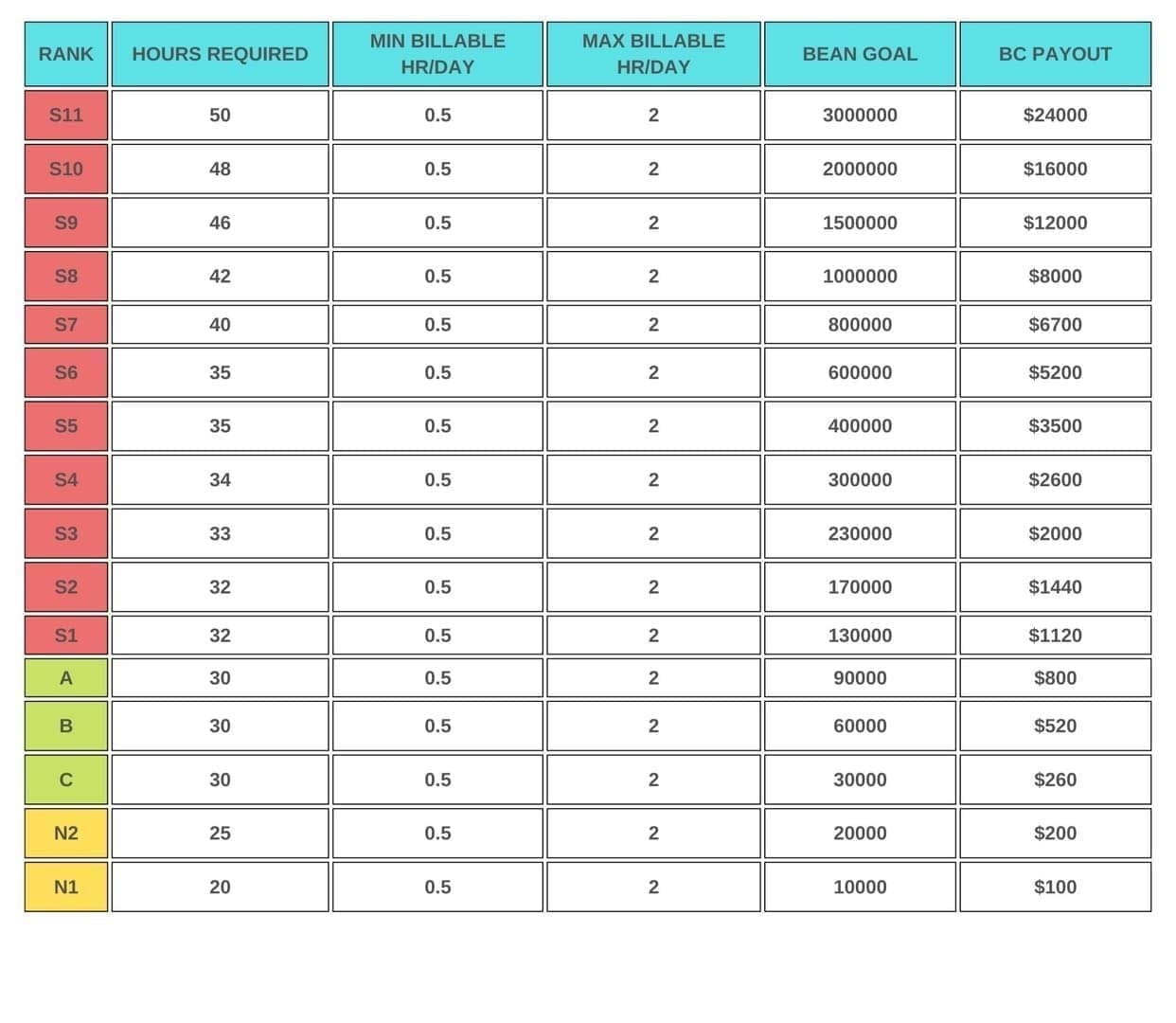
Bean economics:
- 210 Beans = $1 USD
- Minimum withdrawal: 6,700 Beans ($31.90)
- Weekly max withdrawal: 1,050,000 Beans ($5,000)
- Processing: 3-5 days (<210,000 Beans), 25-30 days (>210,000 Beans)
Gala Dragon gift (9,999 Diamonds) triggers 25-second full-screen animation for maximum psychological impact.

Strategic Advantage of Last-Minute Recharging
Last-minute recharging conceals true strength until rivals commit resources. Early-month contributions telegraph capacity, allowing opponents to calibrate responses. Delayed investment creates opportunities for decisive final-hour surges opponents can't match.
Resource conservation enables flexibility when unexpected scenarios emerge. Maintaining 30% reserves for Week 4 provides ammunition for late-stage escalations.
For emergency diamond access, buffget offers instant delivery supporting time-sensitive decisions. The buy Bigo diamonds service ensures transactions complete within minutes.
Timing Creates Competitive Edge
Daily recharge limits: 10,000 Diamonds, 3 attempts per 24 hours. Families planning 30,000 Diamond final pushes must begin three days before deadline.
Pricing: 100 Diamonds = $1.96 (web baseline)
During February 10-14, 2026 event, 1,000 Diamond purchases yield 1,250-1,350 Diamonds, reducing per-diamond costs by 25-35%.
Withdrawals exceeding 210,000 Beans require Two-Factor Authentication (Me > Settings > Account Security). Configure days in advance.
Psychological Warfare
A 15,000-point surge in final 90 minutes creates panic among opponents. Rivals often exceed planned budgets by 150-200% in futile catch-up efforts.
Gala Dragon (9,999 Diamonds) serves dual purposes: substantial combat points + broadcasting financial capacity. The 25-second animation demoralizes opponents who can't match such displays.
Strategic silence amplifies impact. Families maintaining minimal activity for three weeks then unleashing 50,000+ Diamond campaigns in final 48 hours catch opponents unprepared.
Resource Conservation vs Early Investment
Early investment establishes dominance but reveals capacity ceiling. Sophisticated opponents analyze Week 1-2 patterns to estimate total budget.
Optimal balance:
- Week 1: 20% (presence)
- Weeks 2-3: 25% each (pressure)
- Week 4: 30% (decisive firepower)
Real-World Success Stories
Competitive S1 families employ sophisticated protocols. Pre-PK briefings occur 5 minutes before battles, with Shield Coordinators receiving specific deployment instructions.
One documented comeback: family trailing by 12,000 points with 4 hours remaining coordinated 8 members to simultaneously execute 10,000 Diamond recharges (80,000 total), generating 35,000-point swing in 15 minutes. Opponent couldn't respond.
Key differentiator: preparation. Winners pre-positioned payment methods, verified security settings, rehearsed workflows. Each member completed recharge and deployment within 8 minutes.
Step-by-Step Last-Minute Recharge Process
Prerequisites:
- Level 10+ for family creation
- Active family membership
- 5+ monthly event participation
Payment validation: Test with small 100 Diamond package ($1.96) during low-pressure periods to confirm processing works.
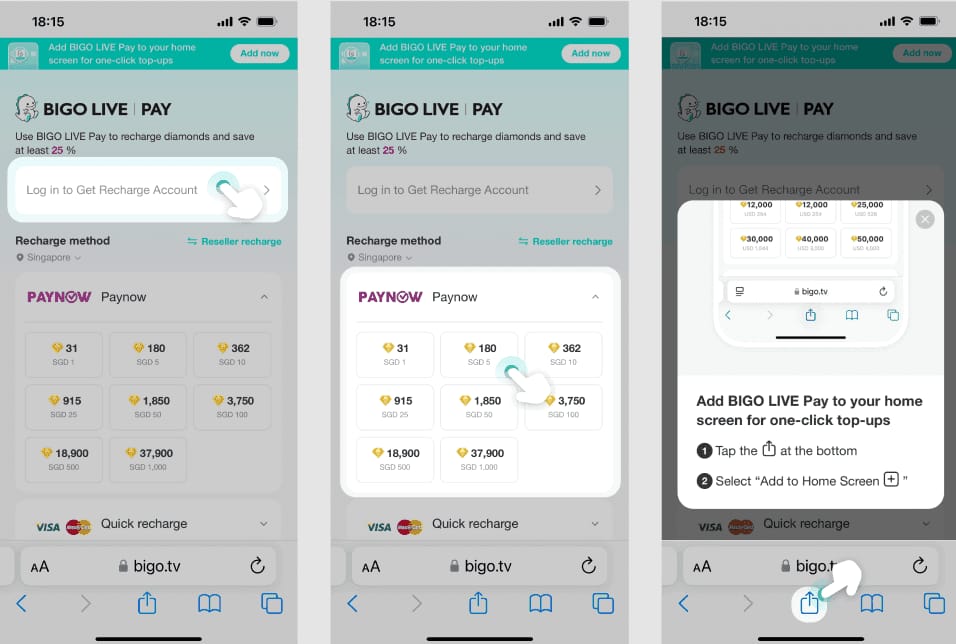
Recharge workflow: Me > Wallet > Recharge > select package > complete payment. Confirmation appears within 2-5 minutes (standard), 8-12 minutes (peak periods). Budget 15-minute buffer before deadlines.
Pre-Battle Preparation
Enable Two-Factor Authentication 48+ hours before critical PK periods (Me > Settings > Account Security).
Family structure: Max 100 members, but competitive families maintain 15-25 highly active contributors. Verify 10+ members within 30-day activity window.
Communication: Establish primary + backup channels. Designate clear chain of command with primary decision-maker, two backup leaders.
Optimal Diamond Packages
1,000 Diamond package = efficiency sweet spot during bonus periods. Base: $19.60, Bonus period: 1,250-1,350 Diamonds (25-35% value increase).
Daily limits: 10,000 Diamonds with 3 attempts per 24 hours. Coordinate across multiple members for concentrated firepower.
Server-specific strategy:
- S1/S2/S4: 10,000 Diamonds = 10,000 combat points
- S3/S6: 10,000 Diamonds = 30,000 combat points (3× effectiveness)
Using buffget for Instant Delivery
buffget processes transactions within 3-8 minutes vs 15-45 minutes for standard in-app purchases during peak load. This speed advantage proves critical when deadlines approach.
24/7 support ensures transaction problems receive attention within 10-15 minutes vs 2-4 hour delays for standard channels.
Redundant payment infrastructure maintains processing capability even during regional outages.
Transaction Confirmation
Verification protocol:
- Navigate to Me > Wallet > Diamonds
- Confirm new balance reflects recharge
- Refresh if numbers don't update (30-90 second cache delays)
- Screenshot updated balance
Secondary confirmation: Me > Wallet > Transaction History. Verify Completed status with correct timestamp. Pending within 5 minutes of deadline requires immediate support contact.
Combat point tracking: On S1/S2/S4, 5,000 Diamond recharge should increase family combat points by 5,000 within 2-3 minutes. On S3/S6, expect 15,000 point increase.
Immediate Gift Deployment
Gift hierarchy:
- High-value single gifts (Gala Dragon 9,999 Diamonds): maximum psychological impact
- Mid-range gifts (500-2,000 Diamonds): better flexibility for coordinated deployments
- Bulk low-value gifts (100-300 Diamonds): mathematical efficiency
Deployment timing: 5-7 second pre-conclusion window for shields. For standard gifts, maintain steady deployment throughout final 15 minutes. Reserve 40-50% for final 3 minutes.
Verification: Assign one member as tracker monitoring family leaderboard in real-time, calling out point increases as gifts deploy.

Diamond-to-Shield Point Conversion Optimization
Base equation: 1 Bean received or 1 Diamond sent = 1 Combat Point
Server multipliers create 15-30% better point-per-dollar ratios for skilled families.
Base Conversion Rates
S1/S2/S4 servers: 1:1 Diamond-to-Bean. 10,000 Diamond investment = 10,000 combat points. Cost per point: $0.00933.
S3/S6 servers: 1:3 conversion. 10,000 Diamonds = 30,000 combat points. Cost per point: $0.00311 (3× efficiency advantage).
Gift Type Efficiency
All gifts convert at identical combat point rates based on diamond cost, but visibility varies dramatically.
Gala Dragon (9,999 Diamonds): 25-second full-screen animation. Mathematically equivalent to 9,999 individual 1-Diamond gifts, but psychological impact differs by orders of magnitude.
Mid-range gifts (500-2,000 Diamonds): Optimal for coordinated deployments. Eight members sending 1,250 Diamond gifts = 10,000-point surge appearing as sustained pressure.
Bulk low-value gifts (100-300 Diamonds): Best for baseline accumulation during non-critical periods. Reserve premium gifts for critical moments.
Multiplier Events
February 10-14, 2026: 25-35% bonus on 1,000+ Diamond packages. Deadline: 23:59 UTC February 14, 2026.
Time zone calculations:
- UTC+8: 7:59 AM Feb 15 local
- UTC-5: 6:59 PM Feb 14 local
Stacking bonuses: S3/S6 servers (3× multiplier) + 35% bonus = 4.05× effective value vs baseline.
ROI Calculations
Baseline: 100 Diamonds at $1.96 = $0.0196 per diamond
35% bonus period: 1,000 Diamonds yields 1,350 for $19.60 = $0.0145 per diamond (26% improvement)
$200 investment: 13,775 Diamonds (bonus) vs 10,204 (standard) = 3,571 additional combat points
S3/S6 servers: Same $200 = 41,325 combat points (bonus) vs 30,612 (standard) = 10,713 point advantage
Critical Timing Windows
Final 6 hours = highest-leverage period. Families within 5,000 points of tier advancement should concentrate 40-50% of Week 4 reserves.
Real-time monitoring: Leading family going silent in final 4 hours likely exhausted budget. Families showing accelerating growth signal deep reserves—avoid unless you possess overwhelming counter-capacity.
Time zone coordination: Month-end deadline typically 23:59 UTC. UTC+9 member completes by 8:59 AM local, UTC-7 by 4:59 PM—16-hour spread requiring careful scheduling.
Final 6 Hours: Strategic Checkpoint
Families maintaining aggressive spending through Week 3 but showing minimal activity in final 6 hours typically exhausted budgets.
Point differential analysis: Trailing by 8,000-12,000 points with 6 hours remaining? Calculate if remaining budget can close gap with 20-30% safety margin. If max deployment yields only 9,000 points against 12,000 deficit, conserve resources for next month.
Opponent patterns: 15,000-point surge at 6-hour mark signals panic or capacity display. Distinguish by analyzing coordinated multi-member deployment (genuine capacity) vs single contributor (potentially exhausting limit).
Last 60 Minutes: Emergency Protocol
Complete all recharges by 90-minute mark: 30 minutes for processing, 60 minutes for deployment. Recharging inside final 60 minutes risks completed purchases arriving after deadline.
Emergency protocols: Designate backup contributors activating if primary members encounter issues. If primary recharge fails at 45-minute mark, backup immediately executes pre-authorized purchase.
Communication intensity: Shield Coordinators provide point differential updates every 5 minutes. Family leading by 3,000 points at 30-minute mark might reduce planned deployment by 40% if gap widens to 6,000 by 20-minute mark.
Time Zone Considerations
UTC conversions:
- UTC+8 (Asia): 7:59 AM next day
- UTC+0 (UK): 11:59 PM same day
- UTC-5 (US East): 6:59 PM same day
- UTC-8 (US West): 3:59 PM same day
Distribute conversion chart showing each member's local deadline.
Daylight saving time: Verify current UTC offsets during week before month-end PK.
Staggered deployment: Asian members deploy 50% during their evening (morning UTC), American members deploy remaining 50% during their evening (late UTC), creating sustained pressure.
Deadline Buffer Management
15-minute buffer rule: All recharges complete by 15 minutes before deadline. Final 15 minutes reserved for gift deployment and verification.
Payment redundancy: Configure two payment methods (credit card + digital wallet). Test both during low-pressure periods.
Transaction confirmation: Screenshot confirmation page, verify wallet balance update, report to coordinator before deploying gifts.
Family Coordination Strategies
Coordinated families outperform disorganized opponents with 2-3× larger budgets through superior timing and communication.
Pre-PK briefing (5 minutes before battles):
- Shield Coordinators (3-5 members): deployment authority
- Point Trackers: real-time leaderboard monitoring
- Reserve Contributors: backup activation
Recharge quota assignment: Competitive family targeting 50,000 combat points assigns 5,000 points to each of 10 primary contributors. 8 successful contributions (80% success rate) = 40,000 points—sufficient even with 20% failure.
Real-time tracking: Point Tracker maintains live spreadsheet showing each member's committed contribution, actual deployment, remaining quota. When member reports issues, tracker alerts Reserve Contributors immediately.
Leadership Communication
Command hierarchy: Primary Family Leader makes strategic decisions, two backup leaders authorized to assume command if primary unavailable.
Channel redundancy: Primary = in-app family chat, backup = external messaging platform. Test both before month-end.
Standardized reporting: Member Name - Amount Recharged - Timestamp - Confirmation Screenshot. Reduces communication from 3-5 messages to single report.
Assigning Recharge Quotas
Tiered structure:
- Core contributors (20+ hours weekly): 5,000-8,000 combat points
- Casual members (5-10 hours weekly): 1,000-2,000 points
Daily 10,000 Diamond limit: Member assigned 10,000 combat point quota on S1/S2/S4 must execute full daily limit. Schedule quota fulfillment across final 3-4 days.
Quota flexibility: Members experiencing hardship request reductions, allocation redistributed among Reserve Contributors.
Real-Time Contribution Tracking
Live spreadsheet: Shows each member's quota, completed contributions, remaining balance. Updated real-time as members report deployments.
Milestone celebrations: At 25%, 50%, 75% of target, Family Leader acknowledges achievement, reinforcing progress.
Shortfall alerts: When current contributions + remaining quotas fall short of target by 10%+, tracker alerts Family Leader and Reserve Contributors. Triggered 4-6 hours before deadline.
Backup Plans
Reserve Contributor pools: 3-5 reserves commit to covering up to 5,000 combat points each if primary contributors encounter issues. Creates 15,000-25,000 point buffer.
Cross-training: At least three members understand Point Tracker role. All Shield Coordinators understand each other's protocols.
Emergency fund: 10,000-15,000 combat points (voluntary donations or family treasury) that Family Leader deploys without individual authorization.
Common Last-Minute Mistakes to Avoid
Deadline miscalculation: Families complete recharges successfully but deploy gifts after cutoff. 15-minute buffer rule prevents this.
Gift type errors: Sending 100 individual 100-Diamond gifts vs single 10,000-Diamond premium gift. Mathematically equivalent, but premium gift generates far more spectator engagement and opponent demoralization.
Transaction verification failures: Member deploys gifts believing recharge completed, discovers transaction failed. Mandatory verification: screenshot confirmation, verify wallet balance, report to coordinator before deploying.
Waiting Too Long
Processing delays: Platform volume increases 5-10× during final hours, extending processing from 2-3 minutes to 8-12 minutes (occasionally 15-20 minutes).
90-minute recharge cutoff: Complete all purchases by 90 minutes before deadline. Provides buffer for processing + deployment time.
Time zone confusion: UTC+8 member calculates deadline as 8:00 AM but fails to account for DST (actual: 7:00 AM). Distribute deadline conversion chart verified against current UTC offsets.
Wrong Gift Types
All gifts convert at identical rates, making selection psychological not mathematical. But families default to mid-range gifts when high-visibility premium gifts would generate superior impact.
Gala Dragon (9,999 Diamonds) = same cost per point as 9,999 individual 1-Diamond gifts, but 25-second animation creates demoralization worth 15,000-20,000 points in prevented opponent counter-spending.
Bulk deployment during final hours: 200 individual 50-Diamond gifts = 10,000 points identically to single 10,000-Diamond premium gift, but appears as background noise not decisive force.
Timing distribution: Deploy 20-30% early (15-minute mark), 20-30% mid-period (8-minute mark), 40-50% final 3 minutes. Maximizes psychological pressure.
Failing to Verify Transactions
Assumption-based deployment: Member deploys gifts believing recharge completed, discovers transaction failed.
Mandatory verification:
- Me > Wallet > Diamonds
- Verify balance increased by expected amount
- Screenshot updated balance
- Report completion before deploying
Transaction history: Me > Wallet > Transaction History shows Completed status with timestamp. Prevents cache-related false confirmations.
Pending protocols: If Pending within 10 minutes of deadline, contact support while activating backup payment method for replacement recharge.
Poor Communication
Uncoordinated deployment: Multiple members send identical gifts, appearing as single contributor not coordinated effort. Shield Coordinator assigns specific gift types to different members.
Quota confusion: Point Tracker's live spreadsheet shows each member's quota, completed contributions, remaining balance. Prevents over/under-contribution.
Silence during critical moments: If primary contributor goes silent 30 minutes before scheduled deployment, Family Leader attempts contact through backup channels while alerting Reserve Contributors.
Neglecting Balance Verification
Pre-deployment checking: Before executing gift deployment, verify current diamond balance matches expected post-recharge total.
Partial deployment tracking: Member assigned 10,000 points who deploys 4,000 at 30-minute mark has 6,000 remaining, not 10,000. Point Tracker shows total quota + remaining balance.
Balance reconciliation: After deadline, verify diamond balance decreased by expected amount. Discovering 2,000 Diamonds remaining after believing you deployed full 10,000 indicates deployment errors.
Advanced Tactics
Elite families employ intelligence gathering to monitor rival activity and identify weaknesses. Real-time leaderboard tracking reveals when opponents deploy resources.
Calculated overbidding: Deploying 25,000 points to secure ranking requiring only 18,000 wastes 7,000 mathematically, but 38% overbid signals overwhelming capacity, deterring future challenges.
Reserve fund management: Maintaining 20-30% of monthly budget as untouchable reserves ensures response capacity for unexpected escalations without emergency fundraising.
Monitoring Rival Activity
Intelligence Monitor: One member refreshes family leaderboard every 2-3 minutes during final hours. Rival showing steady 500-point increases every 5 minutes = coordinated deployment. Irregular 3,000-point spikes + 15-minute silence = independent contributors without central coordination.
Point acceleration analysis: Rival maintaining 1,000 points/hour through Week 3 dropping to 200 points/hour in final 6 hours likely exhausted budget. Families showing accelerating growth (500/hour → 1,000/hour → 2,000/hour) signal deep reserves.
Deployment patterns: Synchronized multi-member deployments (multiple 2,000-5,000 point contributions within 60 seconds) = advanced coordination. Irregular individual contributions = lack of central coordination, vulnerable to concentrated pressure.
Calculated Overbidding
Strategic overbidding by 20-30% creates deterrent effects reducing future spending. Family securing Baron tier (requiring 1,000-3,000 Diamonds) with 4,000 Diamond deployment signals capacity deterring future challenges.
Optimal 25-35% overbid range: 15-20% provides minimal deterrence, 40-50% wastes resources. 25-35% signals genuine capacity surplus while avoiding excess.
Timing: Deploy overbid in final 15 minutes (after opponents committed resources) for demoralization without triggering counter-escalation.
Reserve Fund Management
20-30% untouchable reserve: Family budgeting 50,000 points treats 10,000-15,000 as unavailable for planned deployment.
Activation criteria: Only Family Leader authorizes, only when: opponent surge exceeds 10,000 points within 30 minutes, differential narrows to within 3,000 points of demotion, or confirmed intelligence of rival final-hour challenge.
Replenishment: Families activating reserves implement 10-15% contribution increases following month to rebuild buffer.
Post-Victory Analysis
Performance documentation: Total points deployed, per-member contributions, timing of major deployments, opponent responses, final ranking, efficiency metrics (cost per tier, points vs minimum required).
Efficiency analysis: Comparing early-month vs final-hour deployment often shows 2-3× better psychological impact per point from concentrated final-hour surges.
Contribution equity review: Analyzing whether burden distributed equitably prevents resentment. Consistent over-contributors receive recognition + potentially reduced future quotas.
Maximizing Value with buffget
buffget processes transactions within 3-8 minutes vs 15-45 minutes for standard channels during peak load.
Competitive pricing reduces cost-per-combat-point by 8-12% across full campaigns while maintaining delivery speed and security.
Redundant payment infrastructure maintains processing capability during regional outages.
Why buffget is Essential
Processing speed: 3-8 minute average vs 15-45 minutes standard. Family completing recharges at 20-minute mark through buffget has 12-17 minutes for deployment vs 0-5 minutes through standard channels.
High user ratings: Consistently above 4.7/5.0. 98%+ successful transaction completion during peak load.
Wide game coverage: 200+ games including Bigo Live. Build familiarity during low-pressure periods, execute emergency recharges with confidence.
Instant Delivery Features
Automated processing: Eliminates manual approval delays. Reduces processing from 15-45 minutes (manual) to 3-8 minutes (automated).
Real-time tracking: Monitor transaction status through interface: Payment Received → Processing → Delivered → Completed with timestamps.
Priority processing: Repeat customers (5+ successful recharges) receive priority queue placement, reducing processing to 2-5 minutes vs 3-8 minutes for new customers.
Secure Payment Processing
Multi-payment-method support: Credit cards, debit cards, digital wallets, regional providers. Configure backup methods activating immediately if primary fails.
Encryption: PCI DSS Level 1 compliance, SSL encryption. Financial information remains secure during peak periods.
Fraud protection: AI-powered detection analyzes patterns in real-time, flagging suspicious activity while allowing normal purchases to process without delay.
24/7 Support
Round-the-clock service: Resolve transaction issues at 3:00 AM or holidays when standard platforms operate with reduced staff.
Multi-language support: 15+ languages including English, Spanish, Portuguese, Arabic, Hindi, regional Asian languages.
Emergency escalation: Flag transactions as Month-End PK Emergency for priority response, reducing time from 10-15 minutes to 3-5 minutes.
Budget Planning
Effective planning begins with target ranking identification and reverse-engineering minimum investment.
Baron tier (1,000-3,000 Diamonds): Entry-level competitive participation, $20-$59 USD
Duke tier (30,000-60,000+ Diamonds): Serious contenders, $588-$1,176+ USD
Server-specific thresholds: S1 families require 130,000 beans monthly ($619 USD). S3/S6 servers with 3× conversion require only 43,333 Diamonds ($206 USD)—67% cost reduction.
Weekly allocation:
- Week 1: 20% (presence)
- Weeks 2-3: 25% each (pressure)
- Week 4: 30% (final push)
Family budgeting 50,000 points: 10,000 Week 1, 12,500 each Weeks 2-3, 15,000 Week 4.
Calculating Minimum Investment
Historical analysis: Document minimum points for target tier across 3-6 previous months. If Baron required 18,000-24,000 points (average 21,000), budget 25,000 for 19% safety margin.
Competitive environment: If 2-3 strong families skip current month, thresholds may decrease 15-25%. If new competitive families joined, increase budget 20-30%.
Server optimization: Family on S1/S2/S4 requiring 30,000 points invests $143 USD. Same family on S3/S6 needs only $48 USD—70% cost reduction.
Allocating Resources
Week 1 reconnaissance (20%): 10,000 points through steady 300-500 point daily contributions. Signals participation without revealing max capacity.
Weeks 2-3 sustained pressure (25% each): 12,500 points each week through 1,500-2,000 point deployments every 2-3 days. Appears as consistent strength while operating at 50% capacity.
Week 4 final push (30%): 15,000 points deploy primarily in final 48 hours, with 40-50% (6,000-7,500 points) held until final 6 hours.
Emergency Fund Reserves
10-15% emergency reserve (separate from 30% Week 4): Family budgeting 50,000 total maintains 5,000-7,500 untouchable emergency points.
Activation criteria: Differential narrows to within 3,000 points of demotion, opponent surge exceeds 10,000 points within 30 minutes, or confirmed rival final-hour challenge.
Replenishment: Families activating reserves implement 10-15% increases following month to rebuild buffer.
Cost-Benefit Analysis
Baron tier ($20-$59): Entry-level participation, modest prestige, valuable experience.
Duke tier ($588-$1,176+): Substantial prestige, attracts higher-quality members, establishes reputation. Pursue only if sustainable across 3-6 consecutive months.
Optimal tier: Highest ranking sustainable across 6-12 consecutive months. Consistent Baron performance builds stronger reputation than alternating Duke/no ranking.
Post-Recharge Verification
Three-step verification:
- Screenshot transaction confirmation
- Me > Wallet > Diamonds, verify balance increased
- Me > Wallet > Transaction History, confirm Completed status with timestamp
Real-time shield point tracking: Point Tracker monitors family leaderboard, calls out increases as gifts deploy: Member A deployed 2,000 Diamonds, family points increased by 2,000 - confirmed.
Transaction failure protocols: If Pending within 15 minutes of deadline, contact support while activating backup payment method for replacement recharge.
Confirming Balance Updates
Verification sequence:
- Me > Wallet > Diamonds, note displayed balance
- If no increase, wait 30 seconds and refresh (cache delays 30-90 seconds)
- Screenshot confirmation page + updated wallet balance
Balance reconciliation: Previous Balance + Recharge Amount = Expected New Balance. If different, investigate before deploying.
Tracking Shield Points
Point Tracker: Dedicated member monitors leaderboard continuously, calls out changes every 30-60 seconds.
Conversion verification: S1/S2/S4: 5,000 Diamond deployment = 5,000 point increase within 2-3 minutes. S3/S6: expect 15,000 points (3× multiplier).
Opponent tracking: Monitor 2-3 closest rivals, noting deployment timing and intensity. Immediate 6,000-point counter to your 5,000-point deployment = deep reserves. Delayed/smaller responses = resource constraints.
If Transactions Don't Process
10-minute threshold: If Pending <10 minutes and deadline >30 minutes away, monitor while preparing backups. If pending >10 minutes or deadline <30 minutes, contact support while activating backup payment.
Support contact: Use live chat, state MONTH-END PK EMERGENCY - Transaction pending with 25 minutes to deadline. Provide transaction ID, timestamp, amount, payment method in first message.
Parallel backup: While waiting for support, execute replacement recharge using backup payment method.
Documenting Contributions
Individual logs: Recharge amount, timestamp, transaction ID, gifts deployed (type/quantity), deployment timing, final combat points.
Centralized compilation: Point Tracker compiles into family report: total points, per-member contributions, timing distribution (Week 1-4), efficiency metrics, final ranking, comparison to previous months.
Equity analysis: Each member's contribution relative to quota and engagement level. Identifies over-contributors (recognition, reduced future quotas) and under-contributors (graduated consequences).
FAQ
How does last-minute recharging affect Family Shield rankings?
Concentrates combat points during final hours when psychological impact peaks and opponents have limited response capacity. A 15,000-point surge in final 90 minutes creates panic, triggering irrational counter-spending that exhausts reserves. Works best with resource conservation through Weeks 1-3, concealing true capacity until opponents committed budgets.
What's the optimal time to recharge diamonds for month-end PK?
Complete all recharges by 90 minutes before deadline: 30 minutes for processing, 60 minutes for deployment. Provides buffer for 8-12 minute processing delays during peak load while ensuring adequate deployment time. Earlier recharging (2-4 hours before) reduces risk but sacrifices psychological impact.
Can you win Family Shield in the final hour?
Yes, if you conserved 30% of budget for Week 4 and opponents exhausted reserves. Coordinated 20,000-30,000 point deployment can overcome 8,000-12,000 point deficits when opponents lack response capacity. Requires pre-positioned resources (recharges by 90-minute mark), coordinated protocols, accurate intelligence about opponent limits.
How are diamond contributions converted to Family Shield points?
Base: 1 Diamond sent = 1 Combat Point, 1 Bean received = 1 Combat Point. Server variations: S1/S2/S4 maintain 1:1 Diamond-to-Bean, S3/S6 implement 1:3 (1 Diamond = 3 Beans), tripling value. All gifts convert at identical rates based on diamond cost.
How much should I budget for last-minute push?
Reserve 30% of total monthly budget for Week 4, with 40-50% of that (12-15% total budget) for final 6 hours. Baron-tier families (1,000-3,000 Diamonds total) reserve 300-900 Diamonds for final hour. Duke-tier (30,000-60,000+) maintain 9,000-18,000 reserves. Plus 10-15% emergency fund separate from planned allocations.
What happens if I recharge after PK deadline?
Diamonds recharged after month-end deadline (typically 23:59 UTC final day) won't contribute to that month's rankings. Combat points only register for gifts deployed before cutoff. Recharged diamonds remain in account for future competitions, but timing fails intended purpose. Preventable through 90-minute recharge cutoff rule.
Ready to secure your Family Shield victory? Get instant diamonds through buffget now and dominate month-end PK battles with guaranteed fast delivery, competitive pricing, and 24/7 support. Start your winning recharge today!