

Recommended Discounts
_37751.webp)
Honor of Kings Global
Official Automatic Top-up!! And get extra 100% tokens bonus on first top-up!
44.35% OFF
Related articles


Grandmaster Rank Protection Guide: Honor of Kings 2026
Grandmaster rank protection cards in Honor of Kings provide critical safeguards against star loss and rank demotion. This guide covers the dual protection system—Star Protection Cards and Rank Protection Cards—alongside Bravery Points mechanics enabling 1-6 protected losses. Learn activation timing, teamwide protection triggers, expiration management, and techniques to maintain your 0-24 star Grandmaster position while avoiding Diamond II resets.
Buffget
Understanding Grandmaster Rank Protection Cards
Grandmaster protection operates through three hierarchical components: Star Protection Cards prevent single star loss per defeat, Rank Protection Cards prevent demotion to Diamond, and Bravery Points provide performance-based buffers. Both card types carry 7-day lifespans and function as single-use consumables.
Protection Card Types and Functions
Star Protection Cards consume first, before Bravery Points calculations. When you lose a match that would deduct one star, an active card nullifies this penalty entirely, preserving your current count.
Rank Protection Cards prevent division drops from Grandmaster to Diamond tiers. They activate when you risk falling below 0-star threshold, maintaining Grandmaster status despite losses. The 7-day timer begins at acquisition, not activation.
For competitive support, Honor of Kings global recharge services through buffget offer secure transactions and competitive pricing.
Grandmaster vs Lower Tier Protections
Grandmaster removes automatic replenishment found in Gold-Diamond ranks. Gold V players receive two Rank Protection Cards as baseline rewards, but Grandmaster requires earning protections through milestones.
The 0-24 star range creates unique pressure. Each star represents significant effort compared to Epic's 50-star or Legend's 100-star progressions where protection-to-progression ratios differ dramatically.
Grandmaster enforces strict 7-day inactivity penalties: one star deducted per week. Players at 0-9 stars face complete Diamond II reset; 10-24 stars drop to Diamond I.
Star Loss Prevention Hierarchy
Protection operates in sequence: Star Protection Cards → Bravery Points → Rank Protection Cards → unprotected star loss.
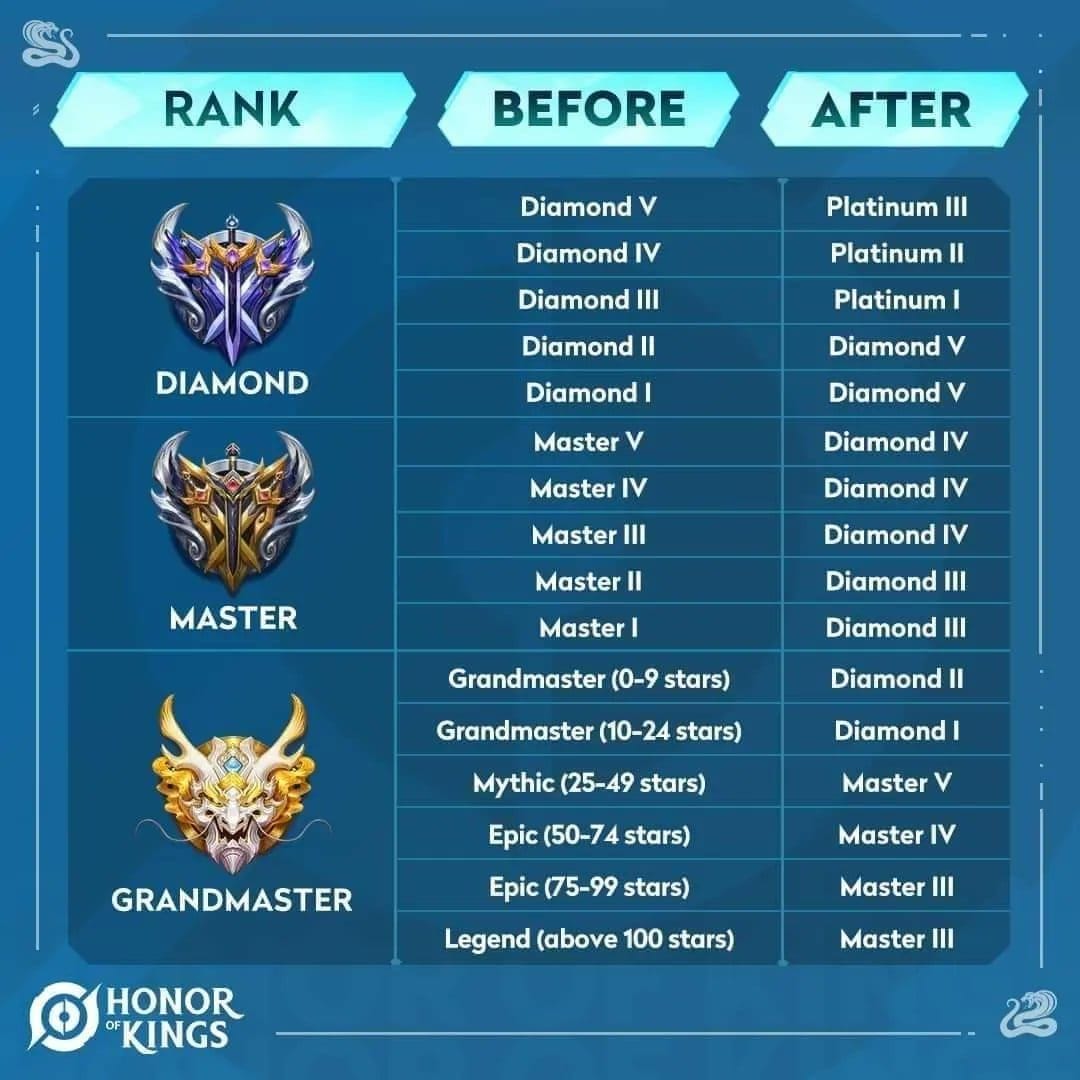
Bravery Points accumulate 3-16 points per match based on performance:
- 2-win streak: 6 points
- 3-win streak: 10 points
- 4+ win streak: 16 points per match
- Gold medal (Diamond+): 50 points bonus
Loss consumption varies by grade:
- A-grade loss: 10-15 points
- B-grade loss: 15-20 points
- C-grade loss: 20+ points
Three A-grade losses can consume zero stars with sufficient points. Four B-grade losses might cost -2 stars. Three C-grade losses could cost -3 stars.
Teamwide Protection Mechanics
Premade squads of exactly 3 or 5 players trigger teamwide Star Protection Card activation. When any squad member possesses active protection and the team loses, all members receive star loss protection simultaneously. This transforms individual cards into powerful team resources.

How to Obtain Protection Cards
Promotion Rewards
Gold V promotion awards two Rank Protection Cards. This front-loaded system encourages aggressive early-season climbing when protections are fresh. No automatic weekly refreshes exist at Grandmaster.
Players climbing Gold V to Grandmaster within one week maximize card utility. Slower climbs risk expiration before reaching peak protection value tier.
Bravery Points as Protection
Bravery Points function as activity-based protection. Accumulating 3-5 base points per match, with bonuses reaching 16 points during 4+ win streaks and 50-point gold medals, creates performance-driven buffers.
This enables 1-2 protected losses after 10+ moderate matches, scaling to 6 protected losses with maximized accumulation through win streaks and exceptional performance.
Inventory Limits
The 7-day expiration creates natural caps preventing extreme hoarding. Accumulating more than 7-10 cards becomes functionally impossible unless multiple events cluster within one week.
Bravery Points allow unlimited banking theoretically, but consumption rates of 10-20 points per loss mean even substantial reserves deplete quickly during losing streaks.
Using Protection Cards Effectively
Manual Activation Process
Access ranked lobby interface before queue entry. Locate protection card management in profile settings and toggle cards to active status. Verify the protection icon appears in match lobby—this confirms system recognition.

Post-match, check inventory to verify consumption. Display should show one fewer card and unchanged star count despite defeat.
Automatic Trigger Conditions
Auto-protection triggers when you lose ranked matches that would deduct stars, provided cards exist in inventory and auto-activation remains enabled. System prioritizes Star Protection Cards first.
Hierarchy: Star Protection Card → Bravery Points → Rank Protection Card → unprotected loss.
Teamwide activation in 3 or 5-player squads means your cards might consume to save teammates' stars, or you benefit from protection you didn't personally activate.
Verification Steps
Pre-match: Check shield icon or visual indicator in lobby adjacent to rank display. Absence signals vulnerability.
Inventory check during queue confirms exact card counts and expiration timers. This informs real-time decisions about proceeding with current match or waiting for additional protections.
Post-match: Review match history for detailed breakdowns showing which protection type engaged. Track consumption patterns and efficiency rates.
Automatic vs Manual Activation
Auto-Activation Behavior
Auto-activation triggers immediately on ranked losses that would deduct stars. System makes no distinction between match importance, time of day, or win/loss streaks—it consumes protection whenever star loss would occur.
This can waste protection on low-stakes matches. Early-evening losses when you're warmed up might not warrant consumption, yet auto-activation depletes resources regardless.
Manual Control Benefits
Manual control allows strategic deployment aligned with risk factors: late-night fatigue sessions, experimental hero testing, or high-pressure promotion games.
Preservation extends inventory lifespan significantly. Auto-consumption might exhaust reserves in 10-15 matches, while manual control stretches resources across 20-30 matches by protecting only the riskiest 50%.
Protection bracketing strategy: activate for first 2-3 cold matches, disable during peak performance middle matches, re-enable for fatigued final matches.
When to Pre-Activate Manually
- Off-meta hero experimentation in ranked
- Connection instability or server maintenance windows
- Season-end ranking pushes requiring maximum ceiling potential
- Known difficult time windows when matchmaking quality degrades
Disabling Auto-Protection
Access ranked mode settings menu. Locate Protection Card Settings and toggle to off or manual only mode.
Verify change persisted after closing/reopening game. Some settings reset after updates.
With auto-protection disabled, manually activate before each match requiring coverage. This creates deliberate decision points improving resource management discipline.
Strategic Timing
Losing Streak Protection
Once you've lost 2-3 consecutive matches, activate protection for next 2-3 matches. Statistical probability suggests continued losses become more likely due to tilt, fatigue, or matchmaking variance.
Bravery Points provide natural protection up to 3-6 losses. Once depleted, cards become your only defense. This transition point represents critical manual activation moment.
Late-Night Sessions
Activate protection for matches after midnight or your personal fatigue threshold. Late-night correlates with increased loss probability due to fatigue, reduced player pool quality, and impaired decision-making.
Matchmaking quality declines during off-peak hours. Fewer active players mean wider skill gaps, increasing outcome variance.
Balanced approach: activate for first 1-2 late matches while assessing performance, then disable if playing well or stop if consuming rapidly.
Hero Practice Protection
Protection enables competitive hero mastery without rank sacrifice. Using one card for 1-2 practice losses might prevent 2-4 stars damage while accelerating hero pool expansion.
Limit protected practice to 2-3 matches per new hero for basic competency, then require unprotected play for mastery completion. This preserves cards for primary rank preservation.
Season-End Strategy
Final week before reset represents maximum deployment timing. Activate all protections nearing expiration for aggressive ranking push—unused cards provide zero post-reset value.
Verify server season reset schedule before committing. Unexpected extensions can leave you protection-less if you've exhausted resources prematurely.
Common Mistakes
Myth: Cards Prevent All Star Loss
Each card prevents exactly one star loss from one defeat. Two protection cards protect exactly two losses. Five consecutive losses mean three will deduct stars regardless of protection inventory.
Bravery Points add complexity—sufficient accumulation sustains 6 protected losses before star deduction, but depends entirely on performance grades during losses.
Wasting Protection on Low-Risk Matches
Auto-activation wastes cards on matches where star recovery would occur naturally. Losses during peak performance hours rarely justify consumption because next match will likely recover that star.
Develop risk assessment: evaluate performance state, hero comfort, time of day, recent win/loss pattern before each match. Reserve protection for multiple aligned risk factors.
Expiration Misunderstanding
7-day timer begins at acquisition, not activation. Players assuming timer starts at usage hoard protections expecting indefinite availability, then discover entire inventory expired unused.
Check protection interface daily noting remaining time per card. Prioritize consuming cards with 1-2 days remaining before those with 5-6 days left.
False Stacking Assumptions
Each match consumes maximum one Star Protection Card regardless of inventory size. Losing with five cards consumes exactly one, leaving four remaining.
Teamwide activation represents the only stacking effect—one player's card extends to all squad members, multiplying beneficiaries rather than protection strength.
Real Scenarios
Preventing Demotion at 0 Stars
Sitting at exactly 0 stars with one Rank Protection Card remaining, next loss triggers demotion to Diamond I unless protection activates.
Activate Rank Protection Card before queuing. Card's anti-demotion function makes this its designed use case. Even losing next match preserves Grandmaster status.
Use protection-granted reprieve to address performance issues—take break, switch heroes, adjust strategy—rather than delaying inevitable rank loss.
Off-Meta Hero Practice
Practicing newly buffed hero with 40% casual mode win rate suggests 2-3 losses likely before competency.
Activate Star Protection Card before first ranked match. Protection enables competitive practice without rank consequences.
After protected loss, assess performance. Basic competency despite loss justifies continued unprotected practice. Fundamental struggles suggest returning to casual mode.
Unfavorable Match Times
2 AM gaming with historical 45% post-midnight win rate versus 55% evening rate creates increased loss probability.
Activate protection for first late-night match. If you win, consider disabling for second match. If you lose protected match, seriously consider ending session—loss indicates performance degradation.
Connection Issues
Two disconnections in last five matches due to unstable internet warrant protection before next match.
Disconnection losses feel particularly frustrating as they don't reflect skill deficits. Protection removes rank sting from technical failures.
If match completes without issues, disable protection—connection appears resolved. Another disconnection means stop ranked immediately.
Advanced Management
Optimal Usage Rate
Playing 20 ranked matches weekly with 2 protection cards weekly creates 10% sustainable baseline (2 protected of 20 matches).
7-day expiration creates use-it-or-lose-it pressure. Three cards with 1-2 days until expiration temporarily spike usage to 100% for high-risk matches.
Bravery Points provide additional capacity. Maximum accumulation sustains 6 protected losses, effectively increasing protection rate to 30-40% for that period.
Win Rate Coordination
55% overall win rate means 9 losses per 20 matches statistically. Two weekly cards protect 22% of losses, making selective deployment critical.
Identify highest-loss-probability scenarios: 40% win rate after midnight, 35% off-role, 45% weekend matchmaking. Allocate protection disproportionately to these scenarios.
Session tracking provides real-time signals. Four consecutive wins increase continued win probability. Disable protection during hot streaks, re-enable after first loss signaling regression toward mean.
Duo Queue Strategy
Duo queue maintains independent protection resources—teamwide activation requires 3 or 5-player squads.
Coordinate distribution: well-stocked player volunteers high-risk heroes/strategies consuming their protections while depleted partner adopts conservative approaches.
Before each match, confirm whether either player has protection active preventing double-waste or double-assumption scenarios.
Aggression Balance
Protection enables calculated aggression—aggressive invades, experimental compositions, demanding heroes—knowing downside is capped.
Optimal balance: 10-15% more aggressive than unprotected baseline. Avoid dramatically risky plays with low success probability even with coverage.
Expiration and Renewal
Individual Timers
Cards operate on individual 7-day timers from acquisition, not synchronized weekly resets. Acquiring cards Monday, Wednesday, Friday creates staggered Monday, Wednesday, Friday expirations.
Staggered system maintains relatively consistent availability across weeks, provided regular acquisition through achievements.
Acquisition gaps create protection droughts. Ten days without card-granting milestones means complete inventory depletion as existing cards expire without replacement.
Season Transitions
Season resets typically clear inventories, though policies vary by server. Official announcements clarify whether cards carry over or reset to zero.
If cards reset, final week before transition represents optimal aggressive consumption timing. Unused cards provide zero post-reset value.
If cards carry over, conservation during season-end provides immediate new-season coverage during volatile early matchmaking.
Duration Checking
Protection duration appears in profile inventory interface via ranked menu or main profile. Each card displays acquisition date and remaining time as Expires in X days.
Daily inventory checks prevent surprise expirations. Set external reminders—phone alarms, calendar notifications—for expiration dates ensuring you never lose cards to forgotten expiration.
Pre-Expiration Maximization
Cards with 1-2 days until expiration should be consumed aggressively on any ranked matches. Even low-risk usage provides more value than expiration.
Usage windows:
- 5-7 days remaining: conservative, high-risk-only
- 3-4 days remaining: moderate-risk justified
- 1-2 days remaining: consume on any ranked play
Alternative: If substantial Bravery Points exist, play without card activation allowing points to absorb losses while preserving cards for post-expiration use.
When Protection Runs Out
Zero Inventory Consequences
Without cards, every loss immediately deducts one star. Direct correlation creates heightened pressure potentially inducing performance anxiety increasing loss probability.
Bravery Points provide only remaining buffer. Sufficient accumulation sustains 3-6 additional losses before star deduction begins. Once depleted, completely unprotected territory where losses translate directly to rank regression.
Adapt psychologically: consciously adopt conservative strategies—safer hero selections, lower-risk plays, reduced experimentation.
Demotion Risk
At 0-9 stars without protection, single loss drops you to Diamond II. Demands maximum conservative play—highest win rate heroes only, avoid off-role, play only peak performance hours.
10-24 star range provides slight buffer with demotion to Diamond I. Still represents significant loss requiring multiple wins to recover.
Inactivity penalties compound risk. 7-day timer deducts one star weekly—avoiding ranked doesn't preserve position indefinitely.
Alternative Preservation
Without protection, preservation depends entirely on positive win rate. Optimize every controllable variable: hero selection, role preference, time of day, squad coordination, mental state.
Hero pool narrowing: identify 3-5 highest win rate heroes, play exclusively until rebuilding protection inventory or climbing to safer star counts.
Time-based selectivity: restrict ranked to high-win-rate windows. 60% win rate 7-9 PM versus 45% after midnight means play only favorable periods.
Rebuilding Reserves
Rebuilding requires achieving card-granting milestones through continued ranked play. Catch-22: need ranked play to earn protections, but playing without protection risks star losses.
Solution: calculated risk-taking during highest-probability-win scenarios. Play exclusively during peak conditions—best heroes, optimal time, strong mental state.
Bravery Points provide interim protection. Focus on win streaks: 2-win grants 6 points, 3-win provides 10 points, 4+ delivers 16 points. Combined with 50-point gold medals, build substantial buffers functioning similarly to cards for 3-6 matches.
Overall Rank Strategy Integration
Hero Mastery Alignment
Early mastery (games 1-20) warrants protection due to high loss probability. Intermediate (21-50) requires selective protection during difficult matchups. Advanced (50+) rarely needs protection as win rate stabilizes above 50%.
Concentrate resources during high-loss-probability learning phases, reduce as competency develops.
Gold medals on mastered heroes grant 50 Bravery Points equivalent to 3-5 protected losses. Virtuous cycle where mastery generates protection resources enabling further development.
Long-Term Stability
Daily planning: which matches warrant activation, current Bravery Points balance, remaining card counts.
Weekly planning: track acquisition versus consumption rates identifying sustainable operation or resource depletion.
Monthly analysis: reveal performance patterns informing allocation. 10% win rate decline final week monthly due to work stress means preemptively increase protection during predictable low-performance windows.
Mythic Transition Preparation
Grandmaster (0-24 stars) to Mythic (25 stars) toward Epic (50) and Legend (100) requires strategy evolution. Higher ranks feature skilled opponents reducing win rate, increasing protection value.
Conservation during late Grandmaster (15-24 stars) prepares resources for Mythic transition. 25-star threshold represents difficulty spike where cards provide maximum value enabling aggressive climbing without demotion risk.
Verify whether protection mechanics change at Mythic and higher tiers before late-Grandmaster hoarding.
FAQ
How many protection cards do Grandmaster players get?
Two Rank Protection Cards upon reaching Gold V. No automatic weekly/daily refreshes at Grandmaster. Additional cards from seasonal events, achievements, or campaigns. 7-day expiration means use within one week or lose.
Do protection cards expire?
Yes, both types carry 7-day lifespan from acquisition. Timer begins when received, not activated. After seven days, unused cards automatically disappear without replacement.
Can you use multiple cards in one day?
Yes, if you lose multiple ranked matches. Each match consumes maximum one Star Protection Card. Five losses with three cards means first three consume cards, final two deduct stars.
What happens losing at Grandmaster without protection?
Losses immediately deduct one star. Bravery Points provide secondary protection—sufficient accumulation absorbs 3-6 losses before star deduction. Once both deplete, every loss directly reduces stars, potentially causing demotion to Diamond I (from 10-24 stars) or Diamond II (from 0-9 stars).
Do cards work automatically or manually?
Both, depending on settings. Default auto-activates on losses deducting stars. Disable auto-activation in ranked settings for manual control before specific matches, enabling strategic resource management.
How long before expiring?
Exactly 7 days from acquisition. Timer begins when received, not used. Check remaining time in profile inventory. Cards with 1-2 days remaining use aggressively on any matches; 5-7 days remaining warrant conservative high-risk-only usage.