

Recommended Discounts

Where Winds Meet
This Top Up service is not applicable to Playstation User.
20% OFF
Related articles


Where Winds Meet Raid Auction Guide: Gold Gear Prices 2026
Where Winds Meet's ten-man raid auction uses ingots for gold gear bidding. Rare tier items finalize at 2,000-5,000 ingots, epic tier reaches 8,000-15,000 ingots, and legendary gear settles at 18,000-28,000 ingots on established servers. Specific legendaries like Martial Codices command 18,000-32,000 ingots, while new legendary releases exceed 40,000 ingots during the first 60-90 days. Server maturity creates 25-35% price variations, and off-peak timing reduces competition by 40-60%.
Buffget
Understanding the Ten-Man Raid Auction System
The ten-man raid auction operates through guild-based bidding at level 20. When gold gear drops during Monday's scheduled raids, guild members bid using ingots—premium currency earned through gameplay or purchased externally. This replaces traditional need/greed rolls with transparent economic competition.
Guild auctions require level 3 guild status with 30,000 prosperity points. Creating a guild costs 300 Echo Jade at level 20. The auction interface tracks up to 20 simultaneous listings through the watchlist feature.
For competitive auction bidding, Where Winds Meet Ingots top up through buffget provides secure access to premium currency with fast delivery and competitive pricing.
Auction Mechanics in Ten-Man Raids
When gold gear drops, the system auto-initiates a timed auction visible to all raid participants. Bidders submit ingot amounts in real-time, with each new bid extending the timer. Highest bidder at timer expiration wins, with ingots immediately deducted.
Peak activity concentrates between 7-10 PM server time. Off-peak windows from 2-6 AM see 40-60% fewer active bidders, presenting strategic opportunities. Mobile notifications introduce 2-3 seconds lag versus desktop clients, disadvantaging mobile raiders during final bidding seconds.
The system prevents overbidding beyond available balance, auto-rejecting bids exceeding current holdings. Guild auctions typically require 20 minutes weekly to process all dropped items from a full ten-man clear.
Ingot Currency Basics
Ingots function as exclusive auction currency, earned through daily activities, weekly raids, achievements, and events. The ten-man instance maintains approximately 10% failure rate among average groups, requiring mechanical competency and coordinated composition.
Server economy maturity dramatically impacts purchasing power. Mature servers demonstrate 25-35% lower auction prices versus new servers, where legendaries routinely exceed 35,000 ingots during the first 60-90 days post-launch. This reflects supply scarcity and inflated demand from competitive progression guilds.
Patch updates trigger 40-60% price surges as new legendaries enter the loot pool. Special events suppress prices 20-30% through increased ingot supply from bonus rewards.
Average Gold Gear Auction Prices by Equipment Slot

Gold gear pricing follows strict tier-based ranges:
- Rare tier: 2,000-5,000 ingots (starts at 500-1,500)
- Epic tier: 8,000-15,000 ingots (starts at 2,000-5,000)
- Legendary tier: 18,000-28,000 ingots (starts at 8,000-12,000)
Specific legendary items command premium pricing:
- Legendary Martial Codex I: 18,000-25,000 ingots
- Legendary Martial Codex II: 22,000-32,000 ingots
- Large Tuning Stone (Doom): 19,000-27,000 ingots
- Large Tuning Stone (Gold Inlay): 17,000-24,000 ingots
New legendary introductions break established pricing entirely, routinely exceeding 40,000-50,000+ ingots. Prices normalize over 4-6 weeks, eventually settling into standard legendary ranges.
Gold Weapon Slot Bid Ranges

Weapon slots generate the most intense bidding wars due to direct damage output impact. Primary weapons for DPS classes consistently reach upper legendary brackets, especially during early raid tier phases.
Optimal bidding strategy: wait 2-3 weeks after raid tier launch. Initial weapon drops see inflated 40,000+ ingot bids, while subsequent weeks normalize to 20,000-28,000 ingot ranges. Patient players save 15,000-20,000 ingots through strategic timing.
Sniping techniques prove most effective at 8-12 seconds remaining on the timer. Desktop clients hold decisive advantages over mobile due to the 2-3 second notification lag.
Gold Armor Pieces Pricing
Armor slots show more price variation based on stat allocation and class synergy:
- Chest pieces (optimal DPS stats): 15,000-22,000 ingots
- Chest pieces (tank-focused): 12,000-18,000 ingots
- Leg armor: Similar patterns, slightly lower than chest
- Helm pieces: 10,000-18,000 ingots (middle pricing tier)
Lower helm competition stems from fewer total stats versus chest or leg pieces. Budget-conscious players often target helms as entry points into legendary sets.
Class-specific armor creates niche markets. Hybrid stat combinations appealing to multiple classes generate bidding wars, while pure tank or healer pieces see reduced competition.
Gold Accessories Cost Analysis
Accessory slots represent the most cost-efficient legendary investments:
- Rings: 8,000-14,000 ingots
- Amulets: 8,000-14,000 ingots
- Belts: 8,000-14,000 ingots
Lower accessory prices reflect smaller individual stat contributions. However, equipping full legendary accessories (two rings, amulet, belt) delivers cumulative power comparable to a single legendary armor piece at 60% total cost.
Accessory auctions see less aggressive bidding during peak hours. Off-peak accessory auctions between 2-6 AM frequently close at starting bid prices of 8,000-10,000 ingots when fewer than three competitors participate.
Price Variations Across Server Economies
Server maturity creates the single largest price variation factor. Established servers with 6+ months of raid progression demonstrate 25-35% lower prices across all legendary tiers versus fresh servers.
New servers experience extreme price inflation during the first 60-90 days post-launch. Legendary items routinely exceed 35,000 ingots as competitive guilds race for progression advantages.
For players on new servers requiring immediate ingot access, buy cheap Ingots WWM through buffget's secure platform ensures competitive positioning without excessive grinding.
High-Population Server Premium Pricing
High-population servers maintain elevated baseline prices due to increased competition for limited weekly drops. Legendary items settle 10-15% above low-population server averages.
The population premium affects all gear tiers proportionally. Rare items that close at 3,000 ingots on low-population servers reach 3,500-4,000 ingots on high-population realms. Legendary items see absolute price increases of 2,000-4,000 ingots.
High-population servers offer compensating advantages through more active guild recruitment and easier raid team formation.
Regional Server Economy Comparisons
Regional server clusters demonstrate distinct pricing cultures based on player demographics and spending patterns, creating 5-10% price variations between regions for identical gear pieces.
Seasonal events impact regional economies differently based on local holiday calendars. Regions celebrating major festivals see temporary 20-30% price drops as event-generated ingot supplies flood auction markets.
Strategic Bidding Tactics for Maximum Value
Successful auction participation requires understanding competitor psychology and timing mechanics. The optimal sniping window occurs at 8-12 seconds remaining, late enough to discourage extended bidding wars but early enough to prevent last-second counter-bids.
Reading competitor bidding patterns reveals maximum price thresholds. Raiders who bid aggressively early often lack ingot reserves for sustained competition, while patient bidders waiting until final seconds typically possess deeper resources.
Emotional overbidding represents the most common auction mistake. Disciplined bidders set maximum price thresholds before auctions begin, walking away when competition exceeds predetermined limits.
When to Bid Aggressively vs Conservatively
Aggressive bidding suits:
- Unique legendary items with uncertain drop rates
- New legendary introductions (justify premium bids)
- Best-in-slot items for your specific class
Conservative bidding applies to:
- Common legendary drops with predictable weekly availability
- Fresh servers during initial inflation periods
- Items appearing in multiple ten-man boss loot tables
Tracking historical price data for specific items reveals whether current bids represent value or overpricing.
Avoiding Emotional Overbidding
Pre-auction preparation prevents emotional decision-making. Establish maximum bid thresholds based on ingot reserves and item replacement timelines. When auctions exceed predetermined limits, exit immediately.
Guild coordination reduces internal competition that drives emotional overbidding. Teams establishing loot priority systems prevent multiple guild members bidding against each other for identical items.
Tracking auction outcomes builds pricing databases that counter emotional impulses with empirical evidence. Data-driven approaches replace gut feelings with statistical confidence.
Gold Gear vs Purple Gear: Cost-Benefit Analysis
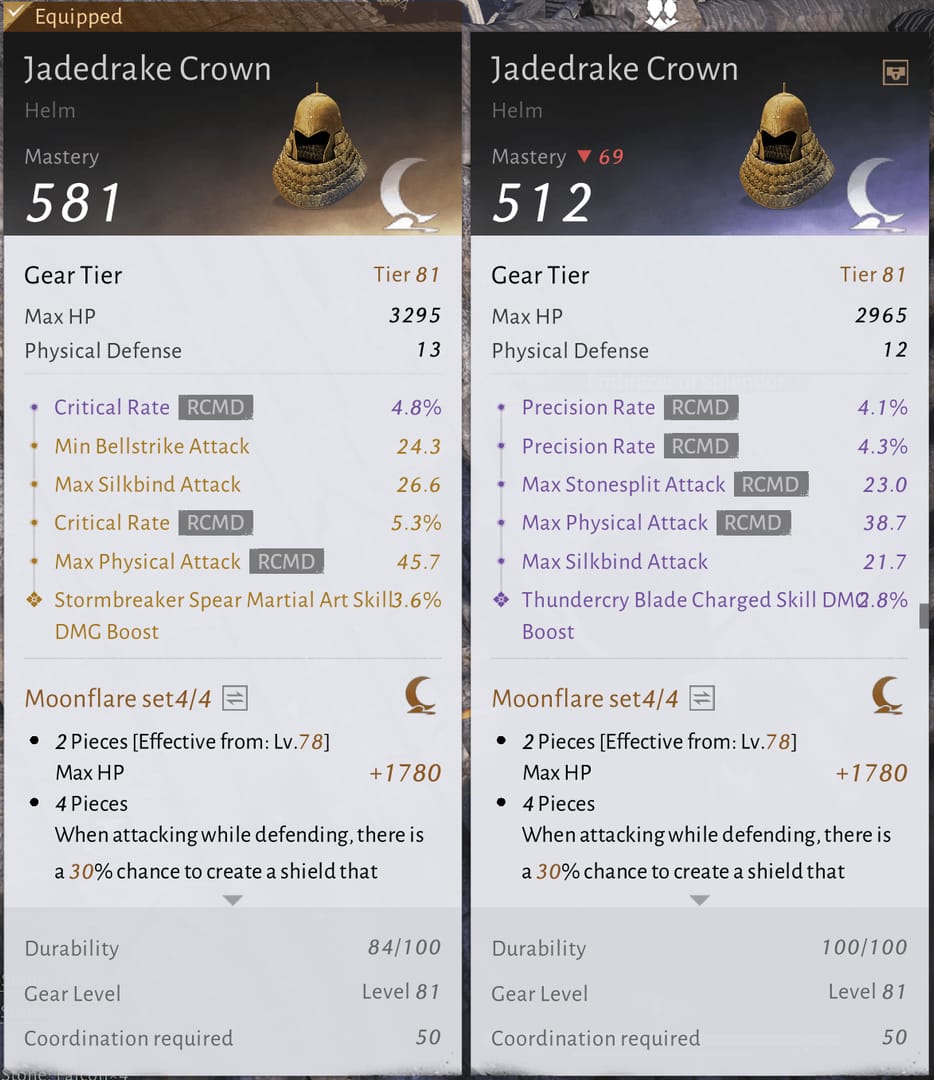
Legendary gold gear provides approximately 15-20% stat increases over epic purple equivalents, but costs 200-300% more in auction ingots. Strategic mixing of legendary and purple pieces optimizes total power relative to ingot expenditure.
Critical slots like weapons and chest pieces justify legendary investment due to disproportionate stat budgets. Conversely, legendary accessories offer minimal advantages over purple versions, making them poor value propositions for budget-conscious raiders.
Long-term investment value favors legendary gear despite higher initial costs. Purple gear becomes obsolete with each new raid tier, requiring complete replacement every 3-4 months. Legendary pieces remain viable longer through upgrade systems.
Power Rating Increase Per Ingot Spent
Calculating power-per-ingot reveals optimal spending priorities:
- Legendary weapon (25,000 ingots, +500 power): 0.02 power per ingot
- Purple weapon (8,000 ingots, +400 power): 0.05 power per ingot—2.5x better efficiency
Raiders with 50,000 ingot budgets achieve higher overall power ratings by mixing strategic legendary purchases in high-impact slots with purple gear in efficiency-focused positions. Pure legendary sets require 150,000+ ingots.
Diminishing returns affect legendary upgrades as gear sets approach completion. Smart raiders front-load high-impact legendary purchases, then maintain purple gear in remaining slots until ingot reserves accumulate naturally.
Common Auction Mistakes and How to Avoid Them
Bidding on incorrect stat allocation: Gold gear with tank stats purchased by DPS players provides minimal benefit despite full legendary pricing. Verify stat priorities before bidding.
Competition pressure overbidding: Auction fever creates irrational escalation where winning becomes more important than value, resulting in 35,000+ ingot bids for items worth 22,000 ingots.
Ignoring guild coordination protocols: Guilds establishing loot councils or DKP integration with ingot auctions prevent internal bidding wars. Circumventing these systems creates resentment and often results in removal from raid teams.
Guild Coordination and Fair Distribution Systems
Progressive guilds integrate DKP (Dragon Kill Points) systems with ingot auctions to balance individual freedom with fair distribution. Raiders earn DKP through raid attendance and performance, with higher DKP members receiving bidding priority or ingot subsidies.
Main spec versus off spec bidding rules prevent gear hoarding. Guilds typically allow full ingot bidding for main spec upgrades while requiring discounted bids or DKP expenditure for off spec items.
Preventing auction manipulation requires transparent guild leadership and clear policy enforcement. Guilds monitoring auction patterns identify suspicious behavior, addressing violations through warnings or removal.
Frequently Asked Questions
How much do gold weapons cost in Where Winds Meet ten-man raids? Legendary gold weapons average 18,000-28,000 ingots on established servers, with new legendary releases reaching 40,000-50,000+ ingots during the first 60-90 days. Rare tier weapons finalize at 2,000-5,000 ingots, while epic tier settles at 8,000-15,000 ingots.
What is the average ingot bid for gold gear in WWM? Rare gear finalizes at 2,000-5,000 ingots, epic tier reaches 8,000-15,000 ingots, and legendary gear settles at 18,000-28,000 ingots. Specific legendaries like Martial Codex II command 22,000-32,000 ingots, while Large Tuning Stones average 17,000-27,000 ingots.
Should I bid on gold gear or save ingots for later? Prioritize legendary weapons and chest pieces first for maximum power gains. Avoid bidding during the first 2-3 weeks of new raid tiers when prices inflate 40-60% above normal ranges.
Do auction prices differ between servers in Where Winds Meet? Yes, mature servers show 25-35% lower prices than new servers, where legendary items exceed 35,000 ingots during the first 60-90 days. High-population servers maintain 10-15% premiums over low-population realms.
What is the best bidding strategy for gold gear auctions? Optimal sniping occurs at 8-12 seconds remaining. Bid conservatively on common drops with predictable weekly availability, and aggressively on unique legendaries with uncertain replacement timelines. Always set maximum price thresholds before auctions begin.
How many ingots should I save before joining ten-man raids? Budget-conscious raiders should accumulate 15,000-20,000 ingots for initial epic gear purchases. Legendary-focused players need 25,000-35,000 ingots for competitive bidding on priority slots. Serious progression raiders maintain 50,000+ ingot reserves.