

Recommended Discounts

StarMaker: Sing Karaoke
As the official partner of StarMaker: Sing Karaoke, Buffget offers instant StarMaker: Sing Karaoke Coins top up with fast delivery. Get up to 70% off on StarMaker: Sing Karaoke Coins recharge via Buffget secure, convenient, and trusted by thousands
20% OFF
Related articles


StarMaker Scoring Guide: Hit A+ & Earn 8,000 Coins/Month
StarMaker scores your karaoke covers across three pillars — pitch accuracy, rhythm timing, and tone quality. Hitting A+ requires consistent precision across all three simultaneously. Active players combining A+ covers with daily missions, peak-hour duets (7–11 PM, Playlist ID 294), and SupernovaX competitions can earn 2,000–3,000 coins weekly — and 6,000–8,000 coins monthly.
Buffget
How StarMaker's Algorithm Actually Works
StarMaker's AI vocal engine evaluates your recording in real time — not just at the end. Every note is scored against the original track's pitch map, timing grid, and tonal signature continuously throughout your performance.
The three weighted scoring pillars:
- Pitch Accuracy: How closely your notes match the target pitch at each moment
- Rhythm & Timing: How well your delivery aligns with the beat and lyric markers
- Tone Quality: Clarity and consistency of your vocal signal — no distortion, no clipping
Weakness in any single pillar pulls your overall score below A+ threshold, even if the other two are strong.
A vs. A+ vs. A++: What's the Real Difference?
An A rating reflects solid performance with occasional pitch drift or timing slips. A+ demands all three pillars stay above threshold simultaneously throughout the recording. A++ requires near-flawless execution with minimal deviation across all three — most competitive players target A+ as the practical sweet spot, since it's achievable with preparation and directly tied to higher coin payouts.
How Each Scoring Pillar Is Measured
Pitch Accuracy
The pitch meter tracks your vocal frequency against the song's note map continuously. Green indicators = accurate pitch; deviation triggers visual warnings.
Pro tip: The algorithm weights sustained notes and melodic peaks more heavily than rapid verse passages. Nail the chorus and held notes — that's where the points are.
Rhythm & Timing
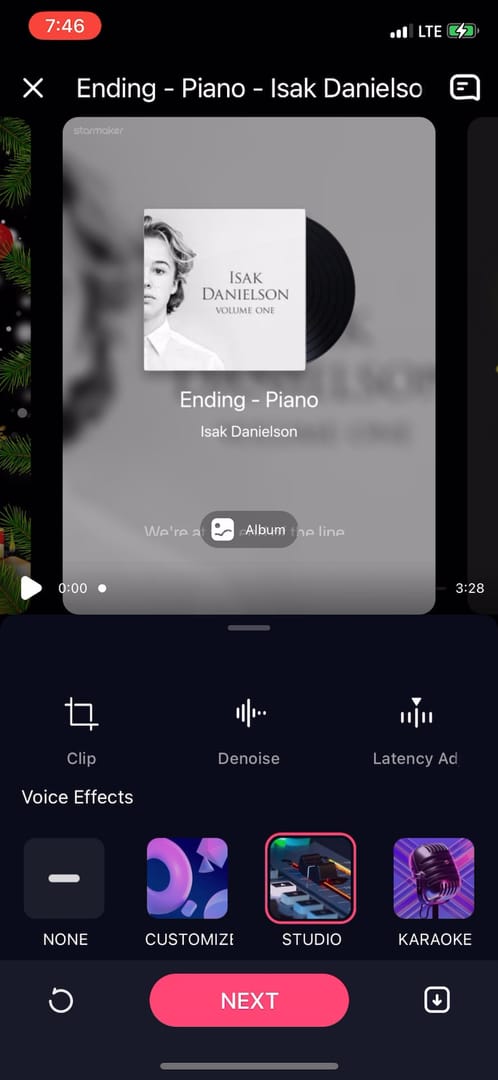
Rhythm scoring checks whether your syllables land within the timing window for each lyric marker. Rushing ahead or dragging behind both register as errors equally.
In practice: Use practice mode to identify your personal tendency — most singers consistently rush or consistently drag. Once you know your pattern, compensate consciously during live recording.
Tone Quality
Tone evaluation measures signal cleanliness. The algorithm flags distortion, clipping from recording too loudly, and inconsistent resonance. It's not judging your artistic style — it's measuring signal quality.
This is why your recording environment and mic setup directly affect your score. Background noise, echo, and audio clipping all register as tone penalties.
How Your Final Grade Is Calculated
Your letter grade is a weighted composite of all three pillars. Social engagement signals — likes, comments, shares — don't directly alter your vocal score but boost algorithmic visibility, which drives more listeners to your cover and increases coin earnings from engagement.
How to Get A+ Ratings: Step-by-Step
Step 1: Choose the right song. Songs with narrow pitch ranges and moderate tempos are significantly easier to score A+ on. Match the key to your comfortable range — forcing notes at the edge introduces pitch drift the algorithm will penalize.
Step 2: Set up your environment. Record in a quiet, acoustically dampened space. Soft furnishings absorb echo. Position your mic at a consistent 6–8 inches to prevent volume spikes that cause clipping. Calibrate input level in-app before recording.
Step 3: Use practice mode. Run through the song at least three times before a scored attempt. Identify the specific bars where your score drops — those are your targeted practice zones. This approach consistently produces higher first-attempt scores.
Step 4: Apply real-time feedback. Keep the pitch display visible during recording. Train yourself to make micro-adjustments without breaking vocal flow. It feels distracting at first — it becomes instinctive with repetition.
Step 5: Review and iterate. After each recording, check the detailed score breakdown. It shows which sections scored highest and lowest across all three pillars. Target your next practice session based on actual data, not guesswork.
Song Selection Strategy
Difficulty Level Matters
Higher-difficulty songs have tighter scoring tolerances. A small pitch deviation costs more points on a hard track than on an easier one. Master medium-difficulty tracks fully before advancing — it's the most efficient path to consistent A+.
Trending vs. Classic Tracks
Trending songs get more algorithmic visibility, meaning more organic engagement and higher coin earnings. But they're often more vocally demanding. The optimal move: find trending songs that fall within your comfortable vocal range.
Classic tracks have more forgiving scoring calibration — reliable A+ targets if you prioritize score over visibility.
Genre Breakdown: Easiest A+ Paths
- Pop ballads: Slower tempo, sustained notes, moderate range — highly favorable
- Acoustic/folk: Narrow pitch range, simple rhythms — among the easiest A+ targets
- R&B: Melismatic runs hurt rhythm scores; go for cleaner, straighter delivery
- Rock: High-energy delivery risks tone clipping — monitor input levels carefully
StarMaker Coin Rewards: How A+ Ratings Earn You More
Rating → Coin Payout
Higher ratings unlock better coin payouts per cover. A+ yields meaningfully more coins than A on the same song. Better preparation → higher ratings → more coins → access to premium features that improve performance further.
To accelerate this cycle, StarMaker coins top up cheap through buffget offers a fast, cost-effective way to bridge the gap while you build your rating skills — competitive pricing, secure transactions, trusted by experienced players.
Daily Mission Stack: 400–600 Coins Weekly in 20–30 Minutes
- Daily login: 10–50 coins + 200-coin 7-day streak bonus
- Flash check-ins: 50 coins (~5 minutes)
- First song recorded daily: 50 coins
- Uploading 3–5 songs weekly: 50–150 coins total
- Sending one gift weekly: 100–150 coins
- Joining a party room weekly: 150–250 coins
- Live room participation weekly: 200–800 coins
The weekly free coin cap is 3,000 coins. Hit every daily mission consistently and you'll reach 6,000–8,000 coins monthly.
Events & Competitions: Fastest Coin Multipliers
SupernovaX is the highest-value competitive event. Entry costs 515 coins per season; top prizes range from 15,000 to 30,000 coins. Mid-tier finishers still earn 200–400 coins weekly during the competition period. Confirmed seasons: Q2 2026 and Q4 2026 — mark these dates and budget your entry coins in advance.
Wonder Capsule yields 100–500 coins per 15–20 minute session. Worth incorporating weekly alongside competition participation.
Referral system: Each successful referral signup awards 100 coins. A referred user's first recharge awards an additional 100 coins.
1,000 performances milestone: One-time bonus of 500 coins for consistent activity.
Social Engagement → More Coins
Likes, comments, and shares increase algorithmic visibility → more listeners → more engagement events → more coin earnings. The algorithm prioritizes accounts with high engagement rates over raw follower counts. A smaller account with strong like-to-play ratios will often outperform a larger passive one.
Duets and Peak-Hour Strategy
Peak-hour AI duets (7–11 PM, Playlist ID 294) yield 100–500 coins per session with 3x engagement multipliers active — one of the highest coin-per-hour activities available to free players. Duets consistently outperform solo covers in both coin earnings and algorithmic reach.
Rocket Gifts sent during the 7–11 PM window in the final seconds of a live session yield 20–30% better Diamond ROI than off-peak gifts.
To maximize your duet strategy further, buy StarMaker VIP and coins online via buffget to unlock VIP benefits — including a 50% visibility boost and 20–30% increase in Diamond earnings — at rates that make the investment return-positive.
Common Mistakes Killing Your A+ Rating
Myth: More effects = higher score. Audio effects don't improve your vocal score. The algorithm evaluates raw pitch, rhythm, and tone. Heavy reverb can actually obscure vocal signal clarity and reduce your tone quality score.
Myth: Recording louder improves tone score. Loud recording causes clipping — a distortion artifact the algorithm penalizes under tone quality. Keep your signal consistently below the clipping threshold using in-app sensitivity calibration.
Real reasons your score keeps dropping:
- Variable recording environment (background noise changing between sessions)
- Inconsistent mic distance (moving closer or farther during recording)
- Fatigue-related pitch drift (singing too long without rest)
Standardize your setup. Limit sessions to 45–60 minutes. Recording near AC units, open windows, or on hard floors introduces noise and reverb the algorithm penalizes. A simple fix — recording in a closet or hanging a blanket behind your mic — produces measurable score improvements without changing your vocal technique.
Advanced Tips from High-Scoring Players
Song Selection as Strategy
Top players analyze a song's pitch range, tempo, and rhythmic complexity before committing to a recording. Personal preference comes second to strategic fit.
Practice Mode Like a Pro
Don't just rehearse — map the exact bars where your score drops below A+ threshold. Isolate those bars and loop them until pitch and timing are locked. This targeted approach is significantly faster than running full song rehearsals repeatedly.
Track Your Metrics
Your 10-digit SID (found in the Me tab) links to your performance history and score analytics. Review your score breakdown after every recording. Identify whether pitch, rhythm, or tone is your primary limiting factor each session. Most singers have one consistent weak pillar — fix that one thing and ratings improve rapidly.
VIP Membership Value
VIP doesn't directly alter your vocal score, but it provides a 50% visibility boost and 20–30% increase in Diamond earnings — meaning your covers reach more listeners and generate more coin-earning engagement. Pricing: $1.99 weekly / $4.99 monthly / $59.99 annually. Return-positive for players recording more than three covers per week. Level 5 Captain status carries 40% weighting in certain scoring contexts.
Frequently Asked Questions
Q: What's the difference between A and A+ on StarMaker? A reflects solid performance with some inconsistencies. A+ requires all three pillars — pitch, rhythm, tone — above threshold simultaneously throughout the recording. A+ coin payouts are meaningfully higher than A.
Q: Does song choice affect your score? Yes, significantly. Narrower pitch ranges, moderate tempos, and lower difficulty ratings mean more forgiving tolerances. Matching song difficulty to your current skill level is one of the fastest ways to improve your average rating.
Q: Do duets give more coins than solo covers? Peak-hour duets (7–11 PM, Playlist ID 294) yield 100–500 coins per session with 3x multipliers — among the highest coin-per-hour activities in the game. More consistent high-value returns than solo covers for most players.
Q: How do I earn more coins fast? Stack daily missions (400–600 coins weekly) + peak-hour duets via Playlist ID 294 + Wonder Capsule sessions (100–500 coins each) + SupernovaX competition (15,000–30,000 coins for top finishers). Active players hit 6,000–8,000 free coins monthly.
Q: Does VIP help you get a higher score? Not directly. But the 50% visibility boost and 20–30% Diamond earnings increase mean more listeners, more engagement, and more coins per cover. Worth it if you're recording consistently.
Q: Can I use buffget to get more StarMaker coins? Yes. Buffget offers StarMaker coin top-up packages at competitive rates — the mid-tier pack delivers 3,000 + 450 bonus coins at 95.8 coins per dollar, the best value-per-dollar ratio available. Fast delivery, secure transactions, trusted by active players.
Stop grinding and start dominating. Visit buffget now to top up your StarMaker coins instantly — fuel your A+ journey without the wait.